Showing posts with label riots. Show all posts

Wednesday, July 07, 2010

Saturday, June 05, 2010


CANADIAN HISTORY:
THE 'ON TO OTTAWA TREK' 75 YEARS ON:


Tomorrow, June 6, will be commemorated as the 75th anniversary of the beginning of the 'On To Ottawa Trek' in Vancouver BC (the trek actually began on June 3). At the height of the depression in 1935 unemployed men were housed in "relief camps" in remote areas of western Canada under the aegis of the Department of National Defence. In these camps workers laboured for 20 cents a day on public works, and the conditions were so atrocious that the Relief camp Workers' Union began a strike in April 1935 demanding such basic things as the provision of first aid equipment in the camps and the abolition of Section 98 of the Criminal Code that essentially made being unemployed a crime.


Eventually the strikers decided on travelling to Ottawa en masse to present their grievances to the federal government. This was known as the On To Ottawa Trek, and the hundreds who hopped freight trains in Vancouver to head east had swollen to three thousand after passing through various prairie cities by the time they reached Regina Saskatchewan on June 14. By this time the federal government had become a little nervous especially as the major population centres lay further east from this gathering throng. They invited 8 leaders to travel on to Ottawa to negotiate with the government providing the mass of the trekkers stayed in Regina.


While the protesters remained camped at the Regina Exhibition Grounds the 8 leaders met with Prime Minister R.B. Bennett on June 22. It didn't go well in Ottawa as the meeting degenerated into a shouting match before the 8 strike leaders were evicted from the premises. meanwhile back in Regina the government had chosen its battleground well as the city was the site of the major RCMP training grounds. Not only were the rail lines blocked to the trekkers but roads were also occupied by RCMP roadblocks determined to keep the protesters in Regina. Like most people in Regina to this very day the trekkers were desperate to get out of Regina (hey I used to live there).


The strike leaders arrived back in Regina on June 26. The protesters were essentially imprisoned in that city with no way forward and no way back, living in the open at the Exhibition Grounds. A public meeting was called for July 1 (then Dominion Day and now Canada Day) at the downtown site of what is now the Regina City Police Station. Only about 300 trekkers showed up, but they were supported by up to 2,000 local people. The meeting went peacefully enough until 8:17 pm when hidden squads of RCMP and Regina City Police came out of hiding and charged the crowd. The crowd fought back, and the battle continued for four hours in the downtown area. The police began using live ammunition. The final death toll was one plain clothes policeman and one striker. The striker died in hospital, and the hospital files were deliberately altered to conceal the cause of death, but this was later exposed. The police claimed 39 injuries in addition to their one death, but denied that they were responsible for the death of the striker.


In the aftermath the Exhibition Grounds were surrounded by police officers with machine guns, and a barbed wire stockade was erected around the area. The inmates of what had now become a prison camp were denied any food or water. The provincial government of Saskatchewan meanwhile was none too happy that the feds had chosen their capital city as the battleground. They invited strike leaders to negotiations. The negotiators were briefly arrested by the enraged police but released under pressure from the Province. Premier Gardiner sent a telegraph message to the federal government accusing the police of "precipitating a riot" while the Province had been negotiating with the strikers. In the end the Province got its way, and food was delivered to the strikers and arrangements were made to transport them back west free of charge to whatever destination they chose.


Meanwhile in Ottawa fantasy ruled supreme as the government claimed that the strikers rather than the police had opened fire. Prime Minister Bennett summed up the view of his Conservative government when he stated that the Trek was "not a mere uprising against law and order but a definite revolutionary effort on the part of a group of men to usurp authority and destroy government". It would be nice if this was true, but it wasn't. Because of their actions during the Trek- and for many other reasons of gross mismanagement and callousness during the depression- the federal Conservatives were reduced in the election later that year from 139 seats to a rump of 39, and the Liberals became the new government with a large contingent of the 'Progressive Party' from the west acting s allies on the left. The work camps were soon dismantled and replaced by seasonal camps operated by the provinces who paid more to the men.


For more on the On To Ottawa Trek and the Regina Riot see the website of the On To Ottawa Historical Society and the Wikipedia entry on this episode in Canadian history. Meanwhile from the National Union of Public and General Employees is the following item about how the beginning of the trek will be commemorated out in Vancouver.
CHCHCHCHCHCHCH
Rally Sunday marks the famed ‘On to Ottawa Trek'
Thousands of young men rebelled in 1935 against Depression era relief camps and helped bring about a national unemployment insurance system.

Vancouver (9 June 2010) - Workers will mark one of the most important anniversaries in Canadian labour this Sunday in Vancouver - the 75th anniversary of the On to Ottawa Trek. The British Columbia Government and Service Employees' Union (BCGEU/NUPGE) is encouraging members to join in the celebration and commemoration.


The 1935 'On to Ottawa Trek'

A rally will be held at 1 p.m. in the city's Crab Park to raise awareness about modern-day poverty and to remember what happened to poor young workers 75 years ago. Crab Park is located at the north foot of Main Street where the trek began in 1935. The rally will feature speakers and the dedication of a plaque to mark the historic site.

Following the ceremony, a delegation will make a modern journey On to Ottawa to talk to the government about homelessness issues and the need for a national housing program.

The original trek began on June 3, 1935, when legions of young men, rebelling against poor working conditions and low wages in Depression era relief camps, boarded boxcars in Vancouver and headed for Ottawa to deliver an historic protest message to the federal government.

Hundreds of 'Trekkers' boarded Canadian Pacific Railway (CPR) boxcars near the foot of Main Street and left the city. By the time they reached Regina, their numbers had swelled to more than 3,000.

Sadly, they were met in Regina by a wall of RCMP officers dispatched by R. B. Bennett, the unsympathetic Conservative prime minister of the day. The intervention prevented the Trekkers from continuing onto Ottawa. Only one of their leaders was permitted to travel on and meet with Bennett.

When the meeting proved fruitless, the remaining Trekkers in Regina rebelled on July 1 (then known as Dominion Day) in an uprising that was put down by arguably the most infamous and oppressive police riot in Canadian history.

But there was a price to pay for Bennett in his coldness and indifference to the plight of the working people. His Tory government was crushed in the next election, reduced from its 134-seat majority to a paltry 39 seats in the House of Commons,

The Liberal government that replaced the Conservatives then set about addressing many of the concerns raised by the Trekkers. Relief camps were abolished and the first steps were taken to set up what eventually became a national unemployment insurance system.

Thursday, March 11, 2010


INTERNATIONAL POLITICS- GREECE:
DEMONSTRATORS CLASH WITH POLICE IN ATHENS DURING GENERAL STRIKE:
Today's general strike in Greece was hugely successful as public service workers were joined by many in the private sector across the country. The one day general strike is the second in a series that will likely be continued and perhaps extended as the government shows no sign of backing down from its austerity measures. During the first strike last week considerable hostility was expressed towards the leader of the PASOK (socialist government) associated union federation. You can read more about this and the reasons behind it at this link at the LibCom website. Here, also from LibCom, is a report on what happened today.
GSGSGSGSGSGSGSGSGSGS
Battle Ground Athens: second general strike leads to pitched battles
More than 150,000 people took to the streets of Athens against the austerity measures in a mass protest marches that have led to extended battles in the Greek capital.

On Thursday March 11 all Greece came to a 24h standstill as a result of the second general strike to be called within less than a month (not the third as reported by foreign media, as the first strike in February only concerned the public sector). As a result of the strike called by GSEE (private sector union umbrella) and ADEDY (public sector union umbrella) as well as PAME (the Communist Party union umbrella) no buses, trams, metros, trolley buses or suburban trains exited their stations, while due to air-traffic control workers’ strike no flights are being realised within or in and out of the country. Only the electric train will function for 4h in Athens in order to facilitate people’s participation in the mass demo at noon. In the health sector, all hospitals are functioning with emergency personnel only, as all doctors, ambulance drivers and nurses are striking. All banks are closed to the public, and all public and municipal offices and services have been shut by the strike. The Corinth Canal has also been shut by the workers controlling it, allowing no ships to make the vital crossing. All boats have been immobilised in the harbours and no inter-city trains are running. Post offices remain closed, while National Electricity, National Waters and National Telecoms workers are taking part in the strike with all offices and factories of the above industries closed for the day. All schools and universities remain also closed as teachers and academics are participating in the strike. Office workers, factory workers and construction workers are also participating en mass in the strike. Firemen and policemen are also performing walk-outs, with a policemen demo at the National Police HQ planned for the afternoon. Due to the participation of the TV, radio, electronic news websites, and the press in the strike, there are no news broadcasts for 24h. Thus the information gathered here will be completed by means of Comments after the end of the General Strike when more information become available. In total more than 3 million people (out of a total population of 11 million) are expected to having taken part in the general strike today.

Background:
The General Strike comes as a new climax to labour struggle against the new austerity measures the Greek government has announced in response to its notorious credit crisis. In the days before the General Strike, stage workers have occupied the Ministry of Labour on Peiraeos street, while the continuing occupation of the General State Accountancy by laid-off Olympic Airways workers has caused the intervention of the state persecutor who has demanded their arrest. No such move of repression has been made yet by the police, and Panepistimiou street remains cut in two by the protesters for more than a week now. In Salonica, the General Industrialists Bureau was occupied yesterday by workers, while radicals from the left dropped a huge banner in the Acropolis reading “take the measures back”. Throughout the week, tax officers performed a 48h strike, school traffic wardens in Northern Greece performed a 3-day strike, while judges and other judicial officers performed 4-h work daily stoppages. No garbage has been collected since last Saturday in Athens, Patras and Salonica as refuse collectors have blockaded the great garbage depot of the three major cities. Finally, in the city of Komitini ENKLO textile workers are mounting an ever more intense labour struggle, with protest marches and strikes: two banks were occupied by the workers last Monday.

The Demos:
The first demo in Athens was performed by PAME, the Communist Party union umbrella, just before noon. PAME allied workers first formed small demos across Athens, then marched to Omonoia square and all together in a 50,000 strong march to the Parliament. At the same time, people started gathering at Patision and Alexandras junction for the demo called by GSEE and ADEDY. The demo which soon gathered over 100,000 people set to march to the Parliament at 12:30 when just outside the Polytechnic riot police forces tried to cut-off a large anarchist block from the march by brutal force. Clashes ensued with extended use of tear gas and molotov cocktails. Despite the air being thick with smoke and CS gas, the march continued its way along Patision avenue and on to Stadiou street where many corporate shops came under attack. After reaching the Parliament, the march turned to Panepistimiou street where renewed clashes erupted at the height of Propylea. With the march coming to its final destination, protesters who continued their way to Omonoia where attacked by Delta team motorised forces. The Delta-team thugs tried to hit the protesters in full speed sparking more pitched battles with police squads encircled and beaten by the angry crowd and several Delta-team motorbikes destroyed. At the time of writing, the battles have moved to Exarcheia where protesters have erected flaming barricades and are confronting riot police and Delta force cops by means of rocks and molotov cocktails. Many protesters have sought refuge at the Polytechnic from which they are confronting police forces on both Patision and Stournari street. During the clashes many protesters have been wounded with one reported to be in intensive care with heavy wounds on the chest. The number of people arrested remains unclear but there are about 16 people detained and 13 cops hospitalised.

In Salonica 6 different marches took place by different unions and umbrella unions. Protesters of the Worker’s Centre march, which numbered 7,000 people in total, attacked corporate and church-owned shops on Egnatia avenue, while two super-markets were looted with the commodities distributed to the people. Despite the police firing tear-gas, the march continued and attacked the Ministry of Macedonia and Thrace with paint and rocks before reaching the Worker’s Centre.

In Ioannina despite the pouring rain around 1.500 people marched against the measures with no news of clashes. Similar protest marches took place in Sitia, Naxos, Veroia, Patras and other cities. In Heracleion, Crete, shops that did not allow their workers to strike were blockaded and several banks came under attack by protesters. In Volos, protesters blockaded the gates of the METKA factory not allowing security-staff (i.e. scabs) to enter the premises, with many more corporate chain shops that did not allow their workers to strike blockaded and shut by the protesters. The official union-bosses of Volos were forced to leave the march after mass heckling by the workers.

Despite anti-strike war waged by the bourgeois media, amongst which the more bloodthirsty ones like Kathimerini is urging the government to crush the protests “even if some protesters die”, the Athens march is estimated to be the largest in 15 years, and has demonstrated the resolve of the working class to fight back against the capitalist onslaught.
GSGSGSGSGSGSGSGSGSGS
Here's how the matter was reported by the Wall Street Journal. There seems to be very little difference between this and the anarchist report, aside from the usual differences in estimating crowd size.
GSGSGSGSGSGSGSGSGSGS
Greece Grinds to a Halt Amid General Strike
Demonstrations by Unions Against Government Austerity Measures Hobble Transit Services, Spark Clashes With Police
By ALKMAN GRANITSAS
ATHENS—Flights were grounded and trains suspended amid a nationwide general strike Thursday, as Greek police fought running street battles with anarchist youths in fresh and violent signs of anger at the government's austerity plans.

Unions called a strike to protest wage and benefit cuts being put in place to trim Greece's swollen budget deficit as the country draws closer to a financial reckoning. An estimated 50,000 people took to the streets.

Greece must refinance a chunk of its giant debt next month, and Greek leaders are leaning hard on counterparts in richer European states to provide some measure of support that could ease those debt sales. Eyes are on European Union finance ministers' meetings early next week.
In the capital city Thursday, masked and hooded youths went well beyond protest—throwing rocks and bottles, smashing shop windows, setting alight trash cans and burning at least one private car. Police fired tear gas and detained more than a dozen people.

There were also separate clashes outside the Greek parliament, Agence France-Presse reported. Greece has a history of sometimes-violent anarchist protesters, though they are well outside the mainstream.

Greece's two umbrella unions, for private- and public-sector workers, called the strike to protest the €4.8 billion ($6.55 billion) package of spending cuts and tax increases that the government announced March 3, which was voted into law days later. The communist-backed PAME union held a separate protest that drew an estimated 15,000 people.

"There is a big turnout today and that shows people are concerned," said Dimitris Papageorgiou, a 49-year-old worker at the Bank of Greece. "Today's protest is because of the austerity measures. Why do the people always have to pay? Who is at fault? It's the foreign speculators and the useless policies of previous governments."

Recent polls show that the Greek public is divided over the austerity plan. While the public opposes some measures, such as an increase in Greece's fuel and value-added taxes, analysts say there is a broad acceptance that something must be done.

"No one really expects the measures to be withdrawn. They were adopted by the government to avoid even worse consequences," said Lefteris Eleftheriadis, 48, a biologist who works in Greece's agriculture ministry and participated in Thursday's protest.

The strike affected public transport, government ministries and state-owned companies. All flights into and out of the country were grounded and all ferry and rail services suspended.
On the streets of Athens Thursday, normal workday activity was muted. Street lights and road signs were festooned with strike posters.
Usual morning news shows on local television were replaced with alternative programming. Many businesses were shut amid fear of violence, and police blocked main thoroughfares around the city center.

Just off the city's central square, a group of about 200 police and fire officials also staged a sympathy protest, challenging the government to fulfill its pre-election promises to protect workers' salaries.

Under pressure from the EU and financial markets, Greece's socialist government last week presented the latest in a series of austerity packages to trim the budget deficit to 8.7% of gross domestic product this year, from an estimated 12.7% last year.

Among other things, the package raises Greece's top value-added tax rate to 21% from 19%, freezes public-sector pensions, cuts civil-service entitlements and bonus pay, and also raises taxes on fuel, alcohol and cigarettes.

The general strike follows several days of escalating labor actions by a variety of smaller unions including those representing tax collectors, teachers, sanitation workers, court workers and local-government officials.
"The latest measures are unjust and everyone has the right to strike," said Sophia Papadopoulos, a 55-year-old office worker who wasn't participating in the strike. "But I think the economic situation will remain difficult. It's always the people who pay."

"In this country there is no follow-through and no respect from the government," said Antonios Mantalvenos, a 56-year-old former Olympic Airlines pilot. "But this is not new, it has always been that way.

"It's going to get much worse. When the civil servants actually see the cuts showing up in their salaries, there will be chaos."

This week, staff from Greece's interior ministry occupied the premises of the Greek government printing office for several days in an effort to prevent the new measures from being published—and thereby becoming law—in the government gazette.
GSGSGSGSGSGSGSGSGSGS
Though not really connected with the strike nor the demonstrations there was another incident the other day where an anarchist, Lambros Foundas, was shot dead by Athens police. Though unlikely to stimulate the same sort of outrage that the killing of teenager Alexandros Grigoropoulos did (which brought about the revolt of December 2008) it is one more symptom of the increasing tensions in Greece. Here's the story, once more from the pages of LibCom.
GSGSGSGSGSGSGSGSGSGS
Anarchist killed by Greek police
In the midst of mass working class struggle against austerity measures, 35 year-old anarchist Lambros Foundas was murdered by police on the morning of 10 March in Athens.

The police claims that he was a “terrorist” and that he was shot while trying to steal a car in the suburb of Dafni, south Athens, and that he was carrying firearms.

Fountas was one of the over 500 anarchists arrested at the Polytechnic riots of 1995 in Athens.
GSGSGSGSGSGSGSGSGSGS
While the death of an anarchist who chose the rather pointless fashion of 'armed struggle' is unlikely to bring about great public outrage there was another incident during earlier demonstrations that might have such consequences. This was the tear gassing of 88 year old national hero Manolis Glezos. This remarkable man, who has accumulated more death sentences and imprisonments in his life than I have fingers and toes first came to prominence by carrying out the first act of the Greek resistance to the occupying Nazis during World War II. He and another man, Apostolos Saulos, tore down the swastika that the Nazis had been flying at the top of the Acropolis. Since then he has had a long and distinguished career in not just politics but in linguistics, geology and civil engineering. What I find most intriguing about the man was his attempt in 1986 to create a community of direct democracy in the town of Aperathu. See the Wikipedia article for a truly inspiring story. He is widely respected by the majority of Greeks whether they agree with his politics or not. After the incident described below he was ruched to hospital. Should the 88 year old die from future complications the public response would probably dwarf that which resulted from the death of Grigoropoulos. The following story which mentions the incident comes from the Occupied London Blog.
GSGSGSGSGSGSGSGSGSGS
“How would it feel if a foreign policeman was beating you up in Athens?
(the Greek uprising is truly going European!)
Wednesday, March 10, 2010
(article written by an Occupied London author for our friends at Last Hours, on the eve of tomorrow’s general strike. Continuous updates and photos, on both websites, tomorrow!)


It is early in the morning of Tuesday, March 9th. Bemused audiences tuned in to an Athens news station to listen to an evidently uncomfortable police spokesperson. How could he not be?
He must explain a rather embarrassing incident: days earlier, on March 5th, the police had tear-gassed Manolis Glezos in the face for trying to prevent a youth’s brutal arrest [photo].
Glezos is 88 years old today; it was almost 70 years ago, on May 30 1941, in Nazi-occupied Athens that he and Apostolos Santas climbed up the Acropolis and tore down the Swastika – an action for which he was arrested and tortured the following year.

Trying to justify the police’s action and to show that things must stay under control at any cost, the spokesperson made quite a revealing statement: “if the local police fail at their task”, he claimed, “the EU and the Greek government are ready to dispatch a 7,000-strong European police force to repress what might seem like an upcoming revolt”. “Imagine it!”, he added, “how would it feel if a foreign policeman was beating you up in the streets of Athens?” A funny question, that one. You would imagine police baton blows feel similar regardless of the passports of those holding them. Whether or not his statement was a slip-of-tongue, it definitely seems to hold some validity: a supra-national police force, the “European Gendarmerie Force” (EGF) does exists already and is prepared to take operations in countries where local governments invite it [http://www.statewatch.org/news/2007/oct/eu-gendarmerie-treaty-sept-2007.pdf]. The Greek government have so far declined to answer questions on the issue in parliament. I don’t think Manolis Glezos was expecting to see German public forces on the streets of Athens again in his lifetime. But then again, if they tear-gas the way the Greek cops do, there won’t be that much for anyone to see…

General strikes are more common in Greece than in most European countries – but still, they tend to come in the rate of one or two per year – not per calendar month. Thursday’s general strike is the country’s third (two full-day and one half-day) in the few weeks alone.
Panepistimiou Avenue, part of the main protesting route – and one of Athens’ major thoroughfares – has been closed off for a week by strikers of Olympic Air; on March 10th, an attorney general ordered the police to disperse the crowd of about 2,000 who have gathered there.

The country’s official printing-house (where state laws are printed in order to come into effect) is currently occupied by employees in protest against the newly-introduced austerity plan. The general accounting office (this, ironically, in charge of monitoring the effects of the implementation of the austerity plan) is also under occupation by its employees. In the small northern city of Komotini employees at a local troubled company went straight to the source and occupied two of the city’s main bank branches.

December’s revolt had been a strong warning sign. The “700 euro generation” (in a country where everyday living expenses closely compete to the UK’s) had every reason to revolt. The death of a 15-year old boy? Cities smash and burn for days. An “austerity plan” pushing labour rights back by a few decades overnight; severe wage cuts, VAT increases, pension-freezes…

It is Wednesday, March 10th – the eve of the third recent strike in Greece. “I don’t really earn enough to get a cab to tomorrow’s demonstration”, writes a commentator on Athens IMC. “And there’s no public transport, as everyone is participating in the strike. Good for them. We are driving down there tonight, staying with a friend. And we’ll be using the car’s engine oil to wash the streets, our little gift to the thugs of the police’s motor-cycle Delta force.” There is anger building up in Athens’ streets and many expect to see it outpouring in the event that multi-national force descends in the city, if not before… Whether national or international, next time Manolis Glezos takes on the security forces he most certainly will not be alone.

Monday, December 07, 2009


INTERNATIONAL ANARCHIST MOVEMENT-GREECE:
GREECE ERUPTS ONCE MORE:
Just like clockwork one year after the police murder of Alexandros Grigoropoulos Greece erupted once more into rioting. The underlying causes are, after all. still there. Here's how these recent events have been seen by The Guardian in England.
♣♣♣♣♣♣♣♣♣♣♣♣
Greek riots continue into second day:
More clashes during Athens demonstration over fatal police shooting last year of teenager Alexis Grigoropoulos

Comment: The Greek revolution that never was

Street riots continue in Athens

Link to this video
Protesters smashed store windows and threw rocks and firebombs at riot police who responded with teargas today, the second day of violence during commemorations for a teenager shot dead by police a year ago.


The killing of 15-year-old Alexis Grigoropoulos led to two weeks of rioting in Greece last year, with gangs of youths smashing, looting and burning shops across the country in protest at heavy-handed police tactics.


Today's clashes broke out during a demonstration by about 3,000 people, mostly secondary school pupils, through the centre of Athens. Several dozen youths towards the back of the march attacked riot police with rocks, firebombs and firecrackers, smashing some of the bus stops, telephone booths and shopfronts not damaged in yesterday's demonstration.


Protesters injured a passerby who attempted to intervene, beating him unconscious. Police detained at least three youths. Demonstrators scrawled anti-police graffiti and stencilled a photograph of Grigoropoulos on shop windows and walls along the demonstration route.


Minor clashes broke out during a march of about 2,000 people in Thessaloniki, Greece's second largest city, where police fired teargas to disperse youths pelting them with rocks.


Police said at least 16 officers and five demonstrators were injured yesterday, while 177 people were detained in Athens and another 103 in Thessaloniki. One policeman who lost control of his motorbike struck and injured a female pedestrian, who was tended to by demonstrators until an ambulance arrived.


At Athens University, masked protesters broke into the building, injuring the university's dean and pulling down a Greek flag, replacing it with a black and red anarchist banner. The clashes continued late into the night, and police clashed with protesters in the southern city of Patras and the north-western city of Ioannina.


Last night the civil protection minister, Michalis Chrisochoidis, defended tougher tactics used by police, following criticism from a left wing opposition party. "Police detentions, when justified, are not illegal in a democratic society. Neither is it illegal for judicial officials to press charges," he said. "Vandals and hooligans have nothing to do with democracy."
♣♣♣♣♣♣♣♣♣♣♣♣
And, from another point of view, here are how they are seen at the British LibCom site.
♣♣♣♣♣♣♣♣♣♣♣♣
Riots and police brutality on first day of Alexandros Grigoropoulos murder anniversary:
Riots have broken out in Athens and Salonica during the first day of A. Grigoropoulos murder anniversary with police demonstrating extreme brutality leaving two people seriously wounded by a motorised charge on the Athens march.


Police brutality during the marches to commemorate the first anniversary of Alexandros Grigoropoulos murder surpassed any limit today, in a coordinated operation of barbarity and crude violence against protesters across Greece. Under socialist orders police violence has left dozens of people wounded.


In Athens the protest march called at 13:00 in Propylea was attacked by riot police forces before even starting. Protesters fought back erecting flaming barricades and forcing the police to retreat with use of rocks. Protesters also occupied the rectorial headquarters of the University of Athens in Propylea, lowering the Greek flag and flying a black flag in its place. The march continued to Omonoia square where more clashes took place and several shops were destroyed -one consumed in flames. At Syntagma square motorised police forces (Delta team) charged the march from Ermou street. After the charge the Delta-team thugs dismounted and threw rocks at the protesters. As a cause of the police orgy in violence, an elderly member of the Worker’s Revolutionary Party-Trotskyist (EEK) has been reported to be in serious condition due to head injuries: Ms Koutsoumbou, a veteran prisoner of the anti-dictatorship struggle, was hit by a Delta force motorbike during the mounted charge on the crowd. According to Savas Michail, leading member of EEK and major radical philosopher, Ms Koutsoumbou is in intensive care having received far worse hits than during her tortures by the colonels' junta. One more man has been hospitalised with serious injuries. At the time 60 people are reported detained.


In Salonica the 3,000 strong protest march turned violent when riot police attacked it without any provocation with tear gas and blast grenades. Clashes ensued along the main avenue of the city. The police surrounded some 200 protesters outside the Ministry of Macedonia and Thrace, but were liberated by the rest of the march. The previous night the police broke the university asylum in the Salonica Polytechnic arresting 8 people who the authorities claim had attacked the International Expo with molotov cocktails. The march in Salonica has not been concluded at the time of writing and the situation is particularly tense as the protesters are returning to the main avenue to protest against police brutality.


In Larissa the protest march proceeded through the main streets of the city smashing CCTV cameras, coming under attack by riot police forces. The protesters erected barricades and engaged the cops with stones and other projectiles.


There is little information about the course of the marches in other Greek cities.


At the same time, the 21 people arrested in the anarchist social centre Resalto last night have been charged under the notorious anti-terrorist law for construction and distribution of explosives (beer bottles and two bottles of heating oil).


The protest marches for the 1st anniversary of Alexandros Grigoropoulos murder by cops will continue on Monday, while at 21:00 on Sunday there will be a memorial demo at the spot of his shooting in Exarcheia.
♣♣♣♣♣♣♣♣♣♣♣♣
The present "socialist" PASOC government is proving to be at least as brutal and perhaps more so than the previous conservative one of last year. One might wonder why ? Perhaps it is because they have other masters whom they have to serve. Who these puppet-masters might be is suggested by the following article from the business website Market Watch. It seems the Greek government is trying to step through a lot of different doo-doo, and creative accounting no longer serves to hide their problems.
♣♣♣♣♣♣♣♣♣♣♣♣
Greek stocks fall 3% amid deficit worries; S&P may cut rating:
Protesters and police clash on anniversary of youth's death:

By Polya Lesova, MarketWatch
FRANKFURT (MarketWatch) -- Stocks in Greece fell nearly 3% on Monday, as Standard & Poor's warned it may lower the country's credit rating because of the ballooning government deficit.


In Athens, the benchmark ASE stock index dropped 2.7% to 2,318 points, underperforming other European markets. See full story.


In comparison, the pan-European Dow Jones Stoxx 600 index /quotes/comstock/22c!sxxp (ST:SXXP 247.88, -1.15, -0.46%) edged down 0.3%.


The Greek financial sector was hit hard. Shares of National Bank of Greece /quotes/comstock/13*!nbg/quotes/nls/nbg (NBG 6.03, -0.29, -4.59%) fell 5.6% and those of Piraeus Bank SA dropped 4% in intraday trading.


Shares of EFG Eurobank Ergasias declined 6%, while Alpha Bank declined 3.3%.
Cyprus-based Marfin Popular Bank PCL fell 5.1%.


In other sectors, Coca-Cola Hellenic Bottling Co. /quotes/comstock/13*!cch/quotes/nls/cch (CCH 23.97, +0.34, +1.44%) gained 2.4%.


Shares of property developer Babis Vovos International Construction tumbled 6.7%.


The sell-off came as Standard & Poor's placed on Monday Greece's A- long-term sovereign credit rating on a credit watch with negative implications, meaning that the agency may lower the rating.


S&P said it plans to decide on the rating when it receives more information from the Greek authorities on their plans to counter intensifying economic and fiscal pressures.


The agency may downgrade the rating by one notch to BBB+ if it sees the government's fiscal assumptions as "unrealistic."


"The fiscal consolidation plans outlined by the new government are unlikely to secure a sustained reduction in fiscal deficits and the public debt burden," said S&P credit analyst Marko Mrsnik in a statement.


The government of Prime Minister Georgios Papandreou, which took office in October, has recently acknowledged the large budget shortfall it inherited from its predecessor.


The estimate for this year's deficit was raised to 12.7% of gross domestic product, more than six percentage points higher than previous official projections.


Previous administrations have repeatedly misreported fiscal deficits, S&P said.
Deficit concerns
Worries over Greece's ballooning budget deficit have been growing in recent weeks.


Greek banks have underperformed the European financial sector by about 12% during the last month, and the uncertainty over Greece's fiscal position is the main reason for this underperformance, wrote Alexander Kyrtsis, an analyst at UBS, in a note to clients dated Friday.


The other key reasons are the banks' reliance on the European Central Bank's discount window as well as credibility issues following numerous restatements of the situation with public finances, according to UBS.


"Liquidity at the Greek banks is good, therefore gradual ECB disengagement is not a major issue and the related earnings impact will be small," Kyrtsis said.


"The only way to bring the deficit down is to tighten fiscal policy," he said. "Fiscal tightening in the form of direct and indirect taxes and limited government spending is likely to result in a drag on Greece's GDP, thus affecting loan growth and asset quality."


UBS lowered its rating on Piraeus Bank to neutral from buy, but it maintained buy ratings on EFG Eurobank, Alpha Bank and Marfin Popular Bank. It also reiterated its neutral rating on National Bank of Greece.


Separately, police and protesters clashed in Athens amid marches to commemorate the first anniversary of the police shooting of a teenager, according to media reports.


The latest disturbances were a continuation of clashes that started over the weekend and resulted in the arrest of dozens of protesters, reports said on Monday.


The killing of a 15-year-old last December triggered extensive riots in Greece, but the scale of the latest protests is reportedly much smaller.
♣♣♣♣♣♣♣♣♣♣♣
Finally, here's another report from LibCom about day 2 of the contest between the government and protesters.
♣♣♣♣♣♣♣♣♣♣♣
Second day of clashes in Greece in anniversary of Alexandros Grigoropoulos murder:
A second day of protest marches occupations and clashes across Greece marked the first anniversary of Alexandros Grigoropoulos murder as pupils take to the streets.

The second day of the anniversary of Alexandros Girgoropoulos murder was marked with protest marches, occupations and large scale riots in major Greek cities.

Monday was the day of pupils as pan-educational marches against police brutality and in memory of Alexis were staged in all major Greek cities with the Teachers Union and ADEDY (major umbrella union) calling a 3-hour labour stopage to allow people to attend the marches.

In Athens, people started gathering at Propylea at 12:00. Quickly a mass of 13-17 year old pupils attacked riot police forces gathered on Akadimias street. The pupils first attacked the cops with oranges but soon escalated with use of rocks and broken marbles. The police was forced to retreat many times in a rain of projectiles before the march finally started its way towards the Parliament. During the clashes before the beginning of the march 9 people were arrested. Riot police forces came soon again under attack by protesters and resorted to extensive use of tear gas. More clashes occurred before Omonoia square. The 10,000 strong march continued to Klafthmonos square where the march halted due to riot police forces positioning themselves along its sides on the pavement. Marchers demanded the immediate removal of police forces, and started moving only after this was granted. The march then reached Syntagma square and the Greek parliament. On the way back to Propylea the march found the university asylum blocked by riot police forces which engaged the front of the march forcing the protesters to move towards Omonoia, many seeking refuge at the Polytechneio.
Clashes between protesters around the Polytechneio and police forces ensued throughout the afternoon, until the Polytechnic occupation made an exodus in the form of a march at around 18:30 towards Omonoia square where more clashes took place. Unlike yesterday there was no use of the delta-team in the repression operations.

At the same time smaller marches of pupils took to the streets of many Athens neighborhoods. In Kalithea 150 pupils attacked the local police station with sticks rocks and oranges damaging several police cars. In Patisia, 200 pupils attacked the local police station at Agias Lavras with rocks. In Kesariani pupils attacked their local police station with rocks and oranges.

In Salonica a 5,000 strong protest march took to the streets of the city and was soon attacked with tear gas by the riot police triggering a response in stones. When the march returned to the Polytechneio, delta team police thugs broke into the university asylum with their motorbikes and threw tear gas canisters into the building, detaining several people. As a response to the third violation of university asylum in the city during the last three days, protesters occupied the rectorial headquarters of the Aristotelian University. Later a protest march was formed against police brutality and marched again on the streets of the city.

In Ioannina more than 1,500 people marched in the streets of the city attacking capitalist and state targets. Battles developed between the protesters and the police after the former attacked the courts of the city.

In Larissa a thousand strong protest march took to the streets of the city, with the block of pupils attacking the riot police with oranges and rocks.

In Chania, Crete, extended clashes between protesters and riot police broke out in the centre of the city with protesters smashing banks and erecting barricades.

In Irakleio, Crete, clashes broke out between riot police forces and protesters outside the courts of the city where the arrested of yesterday's march were interrogated. The protesters attacked and damaged several police cars and a riot police van, while pupils attacked the back side of the courts themselves. At evening another march took to the streets of the city but was quickly attacked by riot police forces which managed to disperse it with use of force and tear gas.

In Rhodes, clashes broke out between riot police and protesters after the former tried to arrest an pupil attacking a bank. During the clashes one more person was arrested. As a result the protesters have occupied university premises demanding their immediate release.

In Tripoli clashes developed between pupils and riot policemen when the latter blocked the way of the pupil's march.

In the city of Kozani protesters have occupied the city hall denouncing police brutality.

In the island of Samos a pupil protest march took to the streets of Karlovasi, while another pupil protest march in Vathi attacked the local police station as well as the municipal headquarters and the city hall with eggs.

Protest marches also took place in many other towns like Naousa, on Paros island, Zakynthos, Volos and Katerini.

On the legal front, 10 people arrested on Saturday have been released from custody. During the hearing process 13-14 year old pupils from a nearby school marched to the courts erecting barricades on the streets blocking the traffic to and from the central courthouse of Athens.

Regarding the comrades of Resalto and the occupation of the Keratsini city hall, at 13:00 a demo was formed outside the courts of Peiraeus in expectation of the 21 arrested of Resalto, the anarchist social centre raided on Saturday. During the demo a local pupil's protest march joined the protesters piling the riot police guarding the courts with oranges. Meanwhile the city hall and local council of Keratsini published an announcement condemning the arrests of the occupiers of the city hall, and demanding their immediate release. According to the announcement there have been no damages done to the premises during the occupation to allow a police intervention. At 14:45 the interrogating authorities waved the anti-terrorist charges against the 21 arrested of Resalto, deciding they should be tried only for possession and of explosive substances (kerosene heating oil). At 19:00 the 41 arrested occupiers of the Keratsini city hall were released amongst high fists and solidarity slogans of protesters outside the court. They will be tried only for non-criminal offences tommow. The 21 of Resalto are still being interrogated at the time of writing.

Protest marches against police brutality in the last few days have been called for tomorrow in both Salonica and Athens.
♣♣♣♣♣♣♣♣♣♣♣♣
A NOTE ON SOURCES:
For those interested in following events as they develop the LibCom site is excellent, and the comments that are appended to articles often give many more interesting details.
Also useful in days to come will be the following sites:
2)Athens Indymedia (English section)
3)Grecia Libertaria (for those who can read Spanish)
I will be appending other sources in the future.

Thursday, December 03, 2009


CANADIAN POLITICS/CANADIAN LABOUR:
A MILE OF BULLSHIT FOR AN INCH OF TRUTH:
You could not imagine my joy when I came across the following at the CEP Union website. It beautifully ties together the last two posts, one about undercover police and one about a branch of the CEP union. The photo above would be a true cold water bath to try and shock certain 'fashion anarchists' who disgrace the name into some sort of realization of what they are doing. Flick it in front of them and ask, "who are the good guys and the bad guys in this picture".
The answer. The three masked hoods to the right are actually three undercover policemen who were caught red-handed at the 2007 Montebello summit trying to get the rock throwing going. What they were has long since been independently verified, though their identities and who gave the orders for their actions are still a deep dark secret two years later. The grizzled old guy in the suit at the left (an appropriate position ) is Dave Coles of the CEP Union, one of the unionists present at the demonstration who intercepted the 'Police/Black Bloc' before they could put their plan into action and sent them skittering behind police lines for protection. Since that time the CEP Union has taken a somewhat personal interest in getting to the bottom of this incident. Here, from their website, is their latest news on the subject.
õõõõõõõõõõõõõõõõ
Union dragged through bogus process to find out who gave undercover police orders at Montebello:
OTTAWA (December 3, 2009 ) -- As Canada prepares to host the G20 summit next spring, the president of one of Canada’s largest unions is committed to ensuring that protesters won’t be baited by undercover police, as they were at the North American Leaders Summit in Montebello, Qc.

“We are being dragged through a bogus process to get to the bottom of what really happened at Montebello,” says Dave Coles, president of the Communications, Energy and Paperworkers Union, “but we are determined to leave no stone unturned to find out who gave police their orders.”

“It is crucial,” he says, “that as the G-20 meeting looms for next spring, that Canadians can confidently exercise their free speech rights, free from the threat of police intimidation and violence.”

“At the same time, world leaders must know that they can come to Canada without having to worry about violence instigated by police agents to discredit those who want to assemble peacefully to express their views.”

Coles made headlines two years ago when his attempts to stop undercover police officers from infiltrating the peaceful protest were posted on YouTube.

CEP immediately called for an independent judicial inquiry to find out who ordered the police to try to turn a peaceful protest into a violent one, but was told it had to take the case through the Quebec Ethics Committee, established under the Police Act.

That committee has now agreed to a public hearing, but is seeking to hand prosecution of the case over to a public official who has already concluded that the police involved should be excused of wrongdoing.

“So the guy who is prosecuting, is the same guy who has already whitewashed the whole affair,” says Coles. “It’s a total charade.”

CEP today took the precedent-setting step of applying for standing as a party to the hearing before the Ethics Committee with the right to call evidence and conduct cross examination.

CEP is committed to getting to the bottom of what really happened at the Montebello Summit in 2007, says Coles. “We will continue to push for an independent judicial inquiry into this whole cover up, and take whatever steps we need to get there.”
MORE INFORMATION: Dave Coles (613) 299-5628

Saturday, January 24, 2009


INTERNATIONAL POLITICS-GREECE:
UNREST PERSISTS IN GREECE:
Unrest continues to persist in Greece. This week Greek farmers have been staging protests and road blockages over the low price of their products. At the same time fresh clashes have broken out between anarchists and the police in Athens. Here's what's presently happening with the farmers' protests via the AFP news.
...............................
Greek farmers pledge to maintain highway blockades:
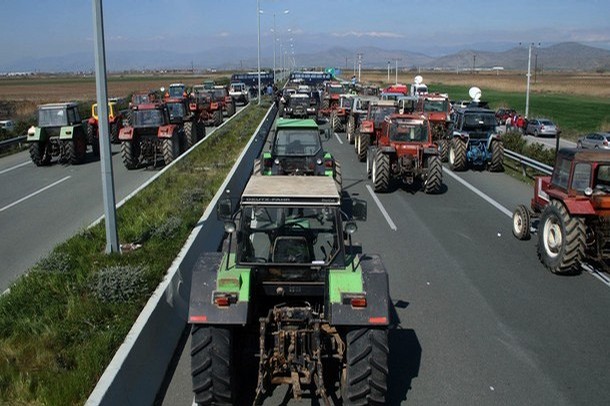
ATHENS, Greece (AFP) — Thousands of Greek farmers on Saturday hunkered down for a fifth day of highway blockades in an ongoing tug-of-war with the government over the low price of produce.

The farmers, who are demanding higher prices for cotton, corn and wheat than those set by the European Union, threatened to escalate their protest despite a 500-million-euro (646-million-dollar) package offered by the state last week.

"We're not leaving unless the government clarifies how the money will be divided per crop," a farmer union member told state TV channel NET at a roadblock in Promachonas near the Greek-Bulgarian border.

Hundreds of tractors continue to occupy key junctions on the Athens-Thessaloniki highway and other roads in northern Greece, effectively slicing the country in two.

The disruption is expected to spread to the Peloponnese on Monday where farmers intend to block the bridge over the Isthmus of Corinth, one of the two road access points to the southern peninsula.

The farmers have also blocked border routes to Bulgaria and Turkey where freight traffic has slowed to a trickle, with the protesters only making exceptions for perishable goods and medical emergencies.

The Bulgarian government on Friday formally protested to the Greek embassy in Sofia, noting that the blockade compromises free travel and trade principles enshrined in the two countries' common European Union membership.

On Friday night, a group of Greek farmers attempted to cross the border into Bulgaria for unspecified reasons but were blocked by Bulgarian police, the semi-state Athens News Agency (ANA) reported.

A similar farmer protest cut Greece in half in 1997 for several weeks, forcing the government to sabotage the tractors, puncturing their tyres at night to get traffic running normally across highways.
...........................
Meanwhile in Athens and Patras anarchists and others continue to clash with police. Here's the story of today's events from the Reuters news agency.
...........................
Anarchists clash with Greek police in Athens march:
ATHENS (Reuters) - Anarchists threw fire bombs and clashed with Greek police in Athens on Saturday during a march to parliament by more than 1,000 demonstrators protesting over the police killing of a teenager last month.

"About 150 anarchists who broke away from the rally threw rocks at the police who responded with teargas," said a police official, who declined to be named. "Later, they threw fire bombs at the offices of the defense minister."

The anarchists set on fire a newspaper kiosk and a bus station and caused minor damages to four banks in the center of the Greek capital. Police chased small groups of youths around the city center and detained at least two people.

Protests also took place in the southwestern Greek port of Patras, where three newspapers' buildings, a journalists union and three banks suffered slight damage.

Greece witnessed the worst riots in decades in December, triggered by the fatal police shooting of a 15-year-old boy and fueled by anger at economic hardships and government scandals.
On Thursday, a protest march against an acid attack on an immigrant cleaner, who was a union activist, caused vandalism by groups of anarchists, who clashed with police.
............................
Here's another take on the story from the British libertarian communist site LibCom.
..........................
Protests resume in Athens:
View Image Details]' jQuery1232839959738="17">
Protesters and riot police have clashed in central Athens today during a protest calling for the release of prisoners arrested during last month's riots, as farmers continued a week-long road blockade over prices.

The clashes occurred outside the University of Athens, as police charged with batons and pepper spray, while protesters used sticks and stones. Several hundred people were involved in the protests, and around 300 continued a march through the town centre. The International Herald Tribune reported that most participants were anarchists.

Also this week, around ten thousand farmers have been blocking major highways and border crossings with tractors over prices, after government talks broke down. Protests at Greece's third largest airport in Crete finished earlier this week, after the runway was blockaded by tractors and burning tires on Tuesday.

Tuesday, December 23, 2008


INTERNATIONAL LABOUR-INDIA:
WORKERS FIGHT BACK AT CONSTRUCTION SITE OF COMMONWEALTH GAMES:
Here's an interesting item from the LibCom website. Working people worldwide are exposed to unsafe and unhealthy conditions at their place of work, but far too often they merely tolerate the inevitable toll on themselves and their workmates. Sometimes, however, they do fight back. This is one of those instances.
...........................
Death sparks building worker riot in Delhi:
After a fatal accident on the Commonwealth Games construction site more than thousand building workers destroyed company offices, cars and trucks.

The aggravating global crisis imposes a new social frame-work for incidents like this: the daily deaths and legal murders become explosive.

The cops shooting a fifteen year old became the trigger of social unrest in Greece, the fatal accident of a building worker sparked the simmering unrest.

The construction site in Delhi is a prestigious show-piece of the capital city, a costly parasitic display of anti-social wealth in times of proletarian misery, desire and wrath...

The Hindu reported that a 28-year-old worker was killed at the Commonwealth Games Village site near Akshardham Temple on Sunday morning when a portion of the crane being used to lift materials to the eighth floor of an under-construction building in the complex fell on him.

The accident led to tension at the site as thousands of workers demonstrated against the project developer, EMAAR-MGF, and the contractors, Ahluwalia Contracts.

Three of their offices were ransacked and more than half-a-dozen vehicles, including SUVs, an ambulance and a dumper truck, were damaged by the mob. The violence, which took place in phases, lasted over four hours.

A case of negligence against the contractors has been lodged with the Pandav Nagar police station. Meanwhile, a company of Delhi reserve police was deployed inside the village to control the situation. The workers claimed that another labourer, Manish (24), was also injured in the incident. There were claims, too, that B P Singh, legal advisor for the contractors was attacked by the workers.

Police said that matters went out of hand around 9.30am. "Thousands of workers at the site suddenly went on the rampage after finding that senior officials had fled the scene. With no news on Shailendra's condition, they barged into the adjoining three offices, broke windows, ransacked the rooms and destroyed computers. Later, they marched to the main security room and tried to set it on fire. They also attacked cars at the site," said a senior police officer.

However, the workers were in no mood to relent. "There have been regular accidents at this site. But the management has never taken our warnings seriously. We demand immediate compensation and a proper identity-card that mentions our designations," said Changoori Singh, a worker at the site.

Wednesday, December 10, 2008


INTERNATIONAL POLITICS/INTERNATIONAL ANARCHIST MOVEMENT-GREECE:
SUCCESSFUL GENERAL STRIKE PUTS FURTHER PRESSURE ON RIGHT WING GREEK GOVERNMENT:
As Greece ends its fifth consecutive days of rioting over the murder of a 15 year old boy by police a general strike called by the General Confederation of Greek Labour (GSEE) and the union of government employees paralyzed the country for 24 hours. This put further pressure on the Conservative government, with a majority of only one seat in the Greek Parliament, to resign and call new elections. The protests and riots by Greek youth have resounded with the general population who harbour a traditional dislike of the police and simmering grievances against the policy of the ruling party. The following article from the Sydney Morning Herald tells the story of the strike. It should be noted that the two union federations' membership of 2.5 million is very significant in Greece, a country of only about 10.7 million people.
........................
Greek general strike fuels poll pressure:

Paola Totaro
Europe Correspondent
December 11, 2008
GREECE'S conservative Government, hanging on to power by just one seat, was being pushed to stand down and call an election as the nation endured a fifth day of demonstrations, clashes and strikes - the worst civil unrest in 30 years.

National stoppages - called by unions demanding improved wages and state support for low-income families - have closed banks, schools and businesses for 24 hours, grounding flights at Athens airport.

Despite calls from the Government for a postponement of the strike amid fears of further violence, the General Confederation of Greek Labour (GSEE) and the civil servants union - which represent about 2.5 million people - persevered, hosting union rallies outside parliament, adding intense pressure on the centre-right Government of the Prime Minister, Costas Karamanlis.

On Tuesday, thousands of protesters marched on the parliament in Athens, chanting bitter anti-government slogans and baiting police. Hours later, an estimated 6000 men, women and children donned mourning clothes to pay their respects at the funeral of the boy shot by police in a street altercation on Saturday night.

Alexandros Grigoropoulos, 15, died when police responded with gunfire after a squad car was allegedly pelted with stones by a group of youths in central Athens.

The lawyer for the two policemen charged over the killing said yesterday that a ballistics report showed the boy had been hit by a ricochet and not a direct shot. Alexis Cougias said this corroborated the officers' account that they had fired warning shots and not directly at the teenager.

The boy's family pleaded for privacy and calm at his funeral on Tuesday, and the burial in a coastal suburban neighbourhood unfolded without incident.

However, groups of young men later turned violent, throwing rocks and petrol bombs when riot police moved in. Police ignored local residents' calls for restraint and hurled tear gas into the crowd to disperse the youths.

The nation's 45,000-strong police force is on full alert in what is regarded as the biggest security mobilisation since Athens hosted the 2004 Olympics.

The shooting of the boy appears to have touched a nerve with Greeks of all ages, who are becoming dissatisfied with rising unemployment, deepening political scandals, and a sense of powerlessness in the face of the global economic downturn.

The opposition leader called for an immediate election, claiming the Government had failed to protect its citizens.

"This country does not have a government," said George Papandreou, leader of the socialist PASOK party. "We claim power … The only thing this government can offer is to resign."

Rioters have barricaded themselves into at least two university campuses in Athens. Police and military cannot enter educational institutions after a 1973 student uprising that resulted in the deaths of 22 people at the Athens Polytechnic.

Reuters quoted Panagiotis Sotiris, 38, of a coalition of leftist groups, as saying the violence was sparked by the teenager's death and by the "struggle to overthrow the Government's policy".