Showing posts with label medicine. Show all posts

Monday, November 11, 2013

Measuring ghosts

MEASURING GHOSTS
     A recent article in Science Translational Medicine asks the question "Can We Measure Autism ?" To my mind this begs the question, "is there really something called "autism" that we should be trying to measure ?". The authors Isaac S. Kohane and Alai Eran inadvertently make the case in the negative. They first of all note the controversy that recent changes in the "psychiatric Bible", the DSM, have provoked. To their credit they mention the "changes in funding" behind some of the debate, though they stop short of a robust criticism of the "mental illness complex" as a money making industry. They also mention how the DSM classifications "strike at the heart of our own identities as autonomous human beings" without going on to criticize the whole enterprise as a method whereby some people exercise power over others. Finally they admit the obvious, that mental health "diseases" simply don't have the "robust and definitive" criteria that is demanded in other fields of medicine.

     The authors, however, are reformers rather than abolitionists. They lay out a series of criteria for diagnosing autism spectrum disorder (the present fashionable name). These would include 1)agreement of the key features of a disorder/disease, 2)agreement on how such features are to measured clinically and 3)a pathway from such measurements to a clinical label that provides useful information on both prognosis and treatment, including estimates of the effectiveness of such treatment. They admit that, "Until recently, ASD diagnoses did not meet most of these criteria.".

     Are the more "recent" criteria any better ? The authors go on to honestly admit that even "expert" (let alone the way that autism is usually diagnosed) ways of diagnosing (labelling ?) autism are wildly variable, and they admit the possibility and even likelihood "do not impart sufficient diagnostic or prognostic accuracy to be clinically useful". Mind you these are the efforts of the recent experts. They also admit the "remarkable individual differences" in response to such interventions. Without, of course, ever invoking the need for evidence based medicine. What is the natural course of the so-called disease if people don't work on it and its carrier ? What is the natural rate of recovery ?

     The authors mention the large body of research in real scientific fields about the supposed causes of "autism", and they edge close to saying that supposed "co-morbidities" may in  fact reflect that autism is, in fact, many different things masquerading under a label that is-my opinion- financially convenient for a large number of "people manipulators". They also state that verifying such research will require a much larger data analysis than has been done to date. The authors have great hopes that the diagnosis of "autism" will be improved through a thorough analysis and combination of the objective signs being investigated (as opposed to the subjective way that the label is presently applied). Their hopes are that coming to a diagnostic decision about autism will more closely resemble real medicine like the diagnosis of heart disease where many lines of evidence are considered. They do, however, admit reality, that "the multimodal approach remains untested".

     Kohane and Eran end their editorial with their vision of a wide data connection net that might actually make autism diagnosis an objective and useful enterprise. They, as reformers, make their bows to the various institutions which presently profit from autism - "research, clinical care, school, home". After mentioning holy four they give an afterthought to "individuals, with their consent". The mind boggles at the thought of a child or adolescent facing such a gathering of power having enough will and guile to escape their kindly embrace without bringing down the inevitable punishment hidden behind the mask of caring. It is significant that they end their essay by calling for data sharing amongst the holy four. The "patient" is left out of the loop here.

     I have to admit that the reforms being proposed can seem quite attractive. They are, however, fitted into a mindset that accepts both the power of this branch of the psychiatric industry and some underlying reality to the label presently being used. While not being an expert I can read the studies being done and recognize some glaring problems with them. An historical scepticism seems in order. I have an old medical book from the 1930s in my library that parses out over 20 different forms of the mental disease called "masturbation". The idea that there was no such disease would have seemed perverse (pun !) to the author. Nowadays the author himself would be the perverse one.

     Psychology and psychiatry are not sciences in any non-ideological sense of the term beyond some rather basic findings. These are where real science is done in these disciples. The rest is very much smoke and mirrors, the smoke coming from the burning of huge piles of public money and small piles of private money spent by those who want to fill their time with useless and usually painful pursuits. The way I see it "autism" is very much like the label "schizophrenic". Both labels conceal a reality of many, many, many different real diseases under a useless generalization. I don't doubt that both schizophrenics and autistics contain large populations that do have legitimate diseases, but the popularity of a catch-all label impedes both diagnostic and therapeutic efforts to deal with these matters. For instance many labelled "autistic" may indeed have gastrointestinal upsets. BUT giving them a secondary diagnosis of autism means that the real problem remains unaddressed. The signs become the focus rather than the cause.

     Ignoring real diseases and "treating" things that are nothing but misplaced words is like putting problems down to demonic possession and imagining that rituals of exorcism are some sort of "treatment". There is finally the question of whether there is anything wrong at all in at least some cases. I'm not of the opinion that labels like autistic or schizophrenic don't disguise at least some real medical problems- many not one. There is, however, the example of masturbation that I mentioned above. In that case the whole intricate system of medical (and popular) superstition was utterly false. How much of what is now described by psychiatric labels is also totally imaginary ? How much is also much better dealt with by literature or philosophy rather than "medicine" ?

     That is the sort of question I would like to leave with the reader. That is why I think that attempts to reform a modern witchhunt by increased rigour are very much asking us to "measure ghosts".

Friday, October 25, 2013

NORMAN BETHUNE AND BLOOD TRANSFUSION: A GREAT CANADIAN LIE

     If you visit pretty well any Canadian government site, or one receiving its funding from the government, you will come across the claim that the Canadian Communist surgeon Norman Bethune founded the first mobile blood transfusion unit in the world during his brief stay in Spain during the Spanish Civil War. This claim was set forth by Bethune himself, and it has been repeated by such institutions as Library and Archives Canada, Parks Canada, The Canadian Encyclopedia and the National Film Board. The reality is quite different, and to their credit both Wikipedia and the Centre for Blood Research briefly mention the actual facts. What were they ? In Catalonia the reality is well known.

     On July 17, 1936 the Spanish Civil War began with a military rising against the government of the Republic. The government dithered and procrastinated. The Spanish working class and peasantry, however, responded with vigor, and the rising was soon defeated in the major industrial areas in Spain, in Catalonia, Valencia, Madrid and the north of the country, excepting Galicia. This resistance was the signal for a far ranging social revolution that was the most profound of the 20th century. The centre of this revolution was perhaps Barcelona, the capital of Catalonia, where on July 19 the anarchosyndicalists of the CNT thoroughly defeated the uprising. Soldiers listened to the pleas of the people, and turned their guns on officers and recalcitrant units. Other desertions from the paramilitary forces followed, and the general in command of the rising, General Goded, flew from the island of Majorca to a speedy arrest.

     When the dust settled it was generally the workers of the socialist UGT and the anarchist CNT who held most of nonfascist Spain, excluding their allies amongst the nationalist Basques. Anarchist organized forces, with a minor contribution from the left communist POUM and an even more minor contribution from the communist controlled PSUC, set out for the Aragon front to attempt to recover the city of Saragossa, lost to the rising because of misplaced trust. Most of the advancing anarchist columns delayed by wasting time securing rural areas, and only the unsupported Durruti column ended up facing the fascists near to the city. The Aragon front was the most active in the early days, and fighting was chaotic and improvised on both sides. It is there that the story of front line blood transfusions began.

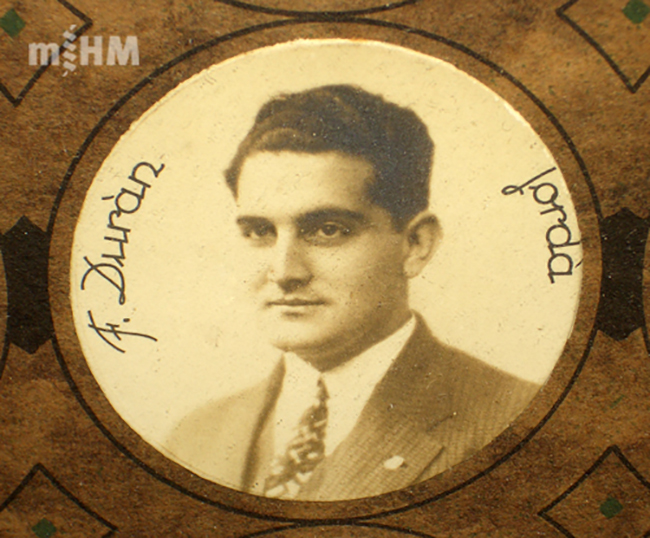
     In the rear of the anarchist front in Barcelona the Catalan doctor Frederic Duran i Jorda organized the first mobile refrigerated blood transfusion unit as an extension of a blood bank in Barcelona, the Barcelona Transfusion Unit. The first units of blood were carried to the Aragon Front in refrigerated trucks in September of 1936. All of this was organized under the dual influence of the CNT Syndicate for Sanitary Services, an outgrowth of the Syndicate of Liberal Professions, and the anarchofeminist Mujeres Libres who took a particular interest in health care. In Catalonia the anarchist doctor Felix Marti Ibanez became director of medical services and social assistance. Decisions about medical services were made by the plenary assembly of the Syndicate. Eventually the "informal leadership" of the CNT/FAI allowed Federica Montseny to become federal Minister of Health in the Madrid government.

     Despite the continued unwise compromises of the anarchists and efforts of sectarian control by the Communists that reduced efficiency and approached treachery the Catalan blood transfusion service remained operative and became, in essence, THE unit of Republican Spain. Communist attempts to control and actually subvert this system began early, even in Catalonia. Some hospitals ended up being controlled by the Communist front PSUC with help from their foreign network. In November of 1936 socialist members of the British Medical Unit resigned from their positions with the Communist controlled Spanish Medical Aid (British organization in supposed solidarity with Spain). They complained that the SMA was "entirely Communist in outlook", and cited the conspiratorial tactics of the Communists that poisoned the atmosphere of  the unit at the Aragon Front. Extreme coercion was applied to these non-communist socialists to join the PSUC Communist front. The resignees complained of several instances where this mania for control damaged the effectiveness of their unit. As if true-believer Communists could care.

     It was in this atmosphere that the late-comer Norman Bethune arrived in Spain in November of 1936. By this time the mobile blood transfusion units which he is credited with establishing were already a functional concern. Every innovation with which he has been credited by Canadian (and Stalinist) authorities was already in place. Mobile blood transfusion at the front - credit the Catalans. Refrigerated transport units - credit the Catalans. There is one thing where is was actually innovative, and I will deal with this soon. Aside from this his only idea was that the blood transfusion service should be "centralized". This is, of course, standard Stalinist procedure, but in Spain it came up against an improvised libertarian system that actually worked. It was also part and parcel of the favouritism that plagued the Spanish Republicans as Communist dominated units were allotted supplies that were denied to anarchist or independent socialist formations. This reached its apotheosis during the May events of 1937 and Lister's march through Aragon where anarchist units at the front saw their base destroyed by Communist controlled units that the Party thought could be better employed destroying its Republican opposition than in fighting fascists.

     The centralization option hardly lived up to its promise of efficiency. By the time he left Spain in July of 1937 Bethune had reduced the Spanish transfusion service to almost total chaos. This was not only because of his extremely unpleasant personality, attested to by pretty well all of his acquaintances before he left for China where he was hailed as a Saint by the Maoists. It was also because of his willing role as a Stalinist tool. His epigram to Spain was that "all those anarchist bastards should be shot". His party friends did their level best in the course of the civil war/revolution to carry this out, and they also added, or emphasized, dissident communists such as the POUM and "uncooperative socialists" who didn't see dictatorship as a sacred goal.

     Bethune had left the mess behind him, and despite the political reservations the central Spanish government had only one place to turn if they were to have a blood transfusion service that worked at all. Dr. Frederic Duran I Jorda of Barcelona, the originator of all that Bethune is credited for, became the director of blood services for the Spanish State. He continued in this function until the victory of Franco, and he later settled in Britain. His contributions were cited (with no mention of Bethune) by Dr. Janet M. Vaughan, the architect of blood services in Britain in WW2 in the British Medical Journal. Bethune got no mention because he deserved none. Stronger words such as saboteur might be appropriate.

     Where was Bethune's contribution unique, at least in the context of Spain ? It was the rather grim use of blood harvested from dead bodies for use in transfusions. Dr. Duran I Jorda was familiar with the technique which he dismissed as impractical and dangerous. His familiarity came from reading medical reports from the Soviet Union, and in 1937 he issued a pamphlet in which he stated that the reports from the USSR were heavily "political", and his objections to the real technical problems.

     The use of blood transfusion began in the Soviet Union in the early 1920s, and was pioneered by Lenin's friend Alexander Boganov. Bogdanov died in 1928 of a "transfusion accident". Maybe. By 1930 his organization had expanded from Moscow to Leningrad, and another Soviet, Sergei S. Yudin, began the use of cadaver blood in 1930. Yudin published his results in 1936, though, as with anything from Russia at the time, the encouragement for "good news" was a life or death matter for the person involved. Yudin's work had been widely trumpeted in the Communist press and when Bethune visited Moscow in 1935 he may or may not have had first hand knowledge with the process  during visits to various Soviet hospitals and clinics. In any case in February 1937 in Spain he stated that he would "use the latest Russian-American methods of blood transfusion".

     Be that it may another Communist doctor from England, Reginald Saxton, was probably more of a driving force behind the use of post-mortem blood than Bethune was. It it hard to say because the records of the Madrid blood transfusion unit under the reign of Bethune are notable for their abscence. Saxton later in September 1937 published an article in The Lancet in whiuch he extolled the use of dead body blood "as described by S.S. Yudin". It never happened. By this time under the directorship of Duran I Jorda  the non-political, often fatal, problems of cadaver blood led to a recognition of reality despite the political sympathies of the Communists. In the meantime, however, under Bethune use of cadaver blood became routine via the practice of the American (Communist !) geneticist who joined Bethune's team in Madrid. This culprit left Spain in May 1937, but transfusion of blood harvested from corpses continued at least in the Madrid zone well into 1938. Its use elsewhere in Spain awaits further historical research given the opposition of Duran I Jorda and the routinely conspiratorial practices of the Communist Party.

     What can we glean from this ? First of all is that Bethune's "contribution" to the attempt of the Communists to centralize (and control !) the use of blood transfusion is rather a "contribution" that is entirely sectarian and not medical. Second the real technical "contribution" of imitating ghouls by draining dead bodies of blood would have been seen much earlier had it not been for sectarian politics. This practice continued despite the efforts of an opponent nominally in charge of the blood transfusion service. Credit conspiracy. Given the historical and present practice of harvesting organs for transplant from those whom the government in China executes one should wonder about the source of the cadaver blood used in both the Soviet Union and under Communist influence in the Spanish Civil War. Human life is, after all, cheap to those who wish to build the Marxist Utopia.

     Note in Proof: This will be followed by a longer (shudder) examination of Bethune in Spain with all the appropriate references. As I mentioned the true story is well known in Catalonia, but I only read Spanish, and I will have to ask for help in translation. I have no desire to comment much on Bethune's earlier career in Canada and the USA except as it relates to his Spanish myth. Nor do I wish to comment much on the later Maoist hagiography of him in China where he may or may not have achieved humanity. The purpose of this piece is to attack a pervasive state-sponsored myth in my own country, Canada, and to correct some widely held falsehoods about the status of Bethune. At this point I do not presume to know the political opinions of Duran I Jorge. All that is demonstrable is that he was not Communist. My own opinion is that he was a Catalan nationalist of liberal opinions. I stand to be corrected on this matter.
    

Wednesday, February 17, 2010


CANADIAN POLITICS-ONTARIO:
STARVING HEALTHCARE-FEEDING CORPORATIONS:
The following opinion piece was written by the President of the Ontario Public Service Employees' Union and published in the online news journal Public Values. I reprint it here if only because there seems to be a need of periodic reminders of how good Canada (and the rest of the civilized world ) has it in terms of health care when compared to the USA. Through the thunder of their (often mindless ) debate down there on the proposals to reform their healthcare system one can discern the almost comical ignorance that many (most ?) Americans have about how their system compares unfavourably with almost all developed and even a few underdeveloped countries. They spend more money and get fewer results. Not the least reason for this inefficiency is that a good proportion of the funds available are skimmed off as profit by the insurance companies, amongst others. Whatever the inefficiencies of other systems at least other countries don't have to apportion money to this class of parasites.
Up here our health care system is under attack and underfunded. Governments, such as those of Ontario, as mentioned in the following article, would much rather spend the money on corporate handouts. Not that our system is perfect by any stretch of the imagination. Molly has expressed her own preferences here at this blog before ie a system of community clinics and mutual cooperative insurance. The beginnings of such a system could easily be initiated even under our present system, with the mutual insurance covering things not presently covered by medicare. The single payer system would have to be retained until such time as non-government methods of social insurance were more fully developed. That process would have to be gradual to avoid unnecessary suffering. In the process of such a "withering away of the state" the first thing to go would obviously be grants to the corporations. The last thing to remain would be corporate taxes and taxes on the wealthy.
Until this process begins, should it ever begin, it can easily be demonstrated that the Rube Goldberg American system is demonstrably inferior to not just that of Canada but also to that of most of the developed world.
Here's the article.
HCHCHCHCHCHCHC
Canada spends one-half per capita on health than US does, yet we are healthier:
Government pleads poverty, yet proceeding with tax cuts to Ontario corporations.
by Warren (Smokey) Thomas
How sustainable is health care? Opponents of Medicare regularly question the public sector's ability to pay the bills as health care creeps up as a share of provincial budgets. New data from the Canadian Institute for Health Information (CIHI) suggests health care costs may be more sustainable than we think.

Affordability is best determined by looking at health costs as a percentage of our overall economy, not by the size of government. The CIHI data suggests that health care costs have escalated roughly in step with the economy, whereas the size of government has been getting dramatically smaller.

Health care accounted for 10 per cent of our economy in 1992 – the last period of recession. In 2009, health care is expected to be 11.9 per cent largely due to a shrinking gross domestic product (GDP), not rising costs. In 2008 it was 10.8 per cent, less than a percentage point above the 1992 levels. This hardly indicates a lack of sustainability.

"As a share of the overall health pie, hospitals have been shrinking. In 1975 hospitals accounted for 44.7 per cent of health expenditures. Today it’s 27.8 per cent."

There is no question we are living longer and better as a result of the investments we have made. From 1996 to 2006 our average life expectancy was extended by three years – the biggest leap in mortality rates since they have been kept.

Federal funding to reduce wait times is having a positive impact, particularly for hip and knee replacements as well as cataracts. This is something Canadians all said we wanted and were willing to pay for.

According to CIHI, money has also been invested in tailored drug therapies, diagnostic technology, training health care professionals and to increase class size in medical and nursing schools. These last investments are necessary if we hope to replace the soon to retire legion of baby boomers serving as professionals within our health system.

While spending as a percentage of our economy has nudged forward over 20 years, it has not been entirely in lock step. In the 1990s governments dramatically slashed funding to health care, leaving present governments with a major infrastructure deficit. It is far more costly to play catch-up than it is to keep the system on an even keel. Finance Minister Dwight Duncan admitted this when speaking to the Ontario Hospital Association Conference last fall.

Hospitals always appear the target of restraint, but are hardly to blame for rising health costs. As a share of the overall health pie, hospitals have been shrinking. In 1975 hospitals accounted for 44.7 per cent of health expenditures. Today it’s 27.8 per cent.

"Total public sector spending used to account for about half the economy. Today it is closer to one third."

In 2009 Canadians are expected to spend $5,452 per capita on health care – both public and private. That’s slightly less than France, Germany, Switzerland and Belgium. It's much less than the United States, which spends almost double per capita and yet leaves 45 million Americans uninsured and many more underinsured. On almost every objective measure, Canadians do better with their health than Americans, from infant mortality to our overall longevity.

In the past year there has been an attempt to divide the progressive community by portraying health care as an insatiable monster crowding out education, housing, transportation and even poverty reduction.

The McGuinty government continues to shrink the pie and is happy to see us all fighting over the scraps. Total public sector spending used to account for about half the economy. Today it is closer to one third.

While the government cries poor, it is stampeding ahead with a series of tax cuts, including a $5 billion reduction to Ontario corporations.

We need to defend all our social services, including health care. When we start pitting our sectors against each other, we all lose.
In solidarity,

Warren (Smokey) Thomas,

Wednesday, October 29, 2008


CANADIAN POLITICS/MEDICINE:
EXPOSING THE MYTH- PRIVATE CLINICS DON'T !!! REDUCE WAITING TIMES:
The Canadian public is exposed to an unending barrage of statements in the media that Medicare isn't functioning well and that we need more private medical clinics to reduce waiting times for various medical procedures. The argument looks good on the surface, but do private clinics really reduce waiting times in the public sector ? The following item from the Nanaimo Daily News suggests that they do not, and it gives the reasons why.


Pundits of the neo-conservative variety expound endlessly on the virtues of the market, and they do so as well when it comes to medical care. No doubt they will be a little less self-confident (at least some of them will) in the wake of the recent banking crisis and market meltdown. Still, in regards to medicine the proponents of a "free market" have always had to ignore a lot to make their case. Their model- the American system- has resulted in the highest per capita outlay on health care related expenses on Earth, and the results have been less than stellar when compared to other jurisdictions. A lot is indeed done. Americans are the most medicated and most surgically treated nation on the planet, but all this busywork has failed to produce the outcomes that less profligate systems have.


Part of the reason for the overmedicalization of the American populace is dealt with in the article below. private practitioners are in an inherent conflict of interest, and it is highly likely that they will err on the side of the most expensive and invasive course of action. This is not to say that they are deliberately dishonest at all. It just that self interest often helps, quite often unconsciously, to weigh the scales when inherently difficult decisions have to be made.


Another reason why market fundamentalism often fails to describe the real world is the lack of recognition that what is being described is an imaginary abstraction where all other things are held constant while either supply or demand change. In the real world prices usually fail to respond to the signals of supply and demand in the rapid fashion that seems academically predictable. This is called the stickiness of prices.


In the case of medicine what is sticky is the supply- of trained medical personnel and their time. The reason that private clinics actually increase waiting times in the public sector is that physicians withdraw their services from the public sector, producing an even greater shortage in that area. It takes many years to train a doctor, and supply is essentially held constant. what goes into one box has to be taken from another. A market cannot respond in a timely fashion in such a situation as the good to be produced- physicians- takes far too long to make to respond to increasing demand. This is also dealt with below.


There is, of course, another model of medical service delivery separate from both the state provided and the private clinic model. The cooperative model is actually an alternative that marries the best of both systems and is superior to both. It's unfortunate that it is rarely mentioned in debates about medical services in Canada. I'll return to this model at the end of this post, but first, the article.

..........................
Private clinic, public cash:
Surgical centre sees 62% more business from VIHA between 2006 and 2008
Dustin Walker, Daily News
Published: Wednesday, October 22, 2008
The number of publicly funded surgeries performed at a private clinic in Nanaimo has more than doubled in the past year, as the local hospital grapples with a growing waiting list for procedures.

There were 238 surgeries done at the Seafield Surgical Clinic in 2006-07 at a cost of $148,000 compared to 620 procedures for 2007-08.

The sharp increase is due to Nanaimo's growing population of older people who require a more complex level of care, said Vancouver Island Health Authority spokeswoman Anya Nimmon.


VIHA signed a five-year deal with a number of private clinics, including Seafield, in late 2006 in an effort to reduce waiting lists for day procedures, and to free up hospital operating rooms for longer, often more complicated inpatient procedures, such as cancer and hip and knee replacement surgeries.

Procedures to treat cataracts or hernias are among those performed at the clinic, said Nimmon.

But a year-long study of the effect of private clinics on Canada's public health care system released earlier this month says wait times are longest in areas where private clinics take personnel from the public system.

"We haven't seen any evidence that private clinics are making any contributions to reducing waiting times," said Colleen Fuller, a health policy researcher with the B.C. Health Coalition, who worked on the report entitled Eroding Public Medicare: Lessons and Consequences of For-Profit Health Care Across Canada.

"Although they may feel they are alleviating pressure on the public system, in fact they are piggy-backing on the public system."

Fuller said because there are a limited number of medical professionals, when they choose to work in private clinics wait times increase at public facilities. "It's not a criticism to say they have to get a return on their investment, that's the way the market works, but it's not supposed to be the way the health care system works."

She added that there are also questions around conflict of interest and whether allowing clinics to perform publicly funded procedures influence a doctor's judgement about where or even if a patient receives surgery.

Fuller said there is a movement worldwide to provide more procedures on an out-patient basis rather than in hospital. This creates a stronger market for private clinics looking to pick up work from the public sector.

Nanaimo seniors advocate June Ross thinks Nanaimo Regional General Hospital needs to find other ways to manage their waiting lists instead of relying on the private sector.

"You've got to improve the existing system, and not do it by using private clinics," she said. "It erodes our existing system."

But the Ministry of Health says health authorities purchase services from private clinics in order to ensure patients receive timely access to needed surgeries. Less than 2% of publicly funded surgeries performed in 2006/07 were at private clinics.

"Using the private sector to enhance the province's capacity to deliver timely surgical services makes sense as the demands on our health system continue to grow," reads a statement from the ministry.

B.C. Health Minister George Abbott told Canwest News Service that the Canadian Health Coalition study is the work of unions and the NDP who don't want the health-care system to modernize.

Repeated calls to Surgical Centres Inc, which operates Seafield, were not returned.
DWalker@nanaimodailynews.com
250-729-4244
...........................
THE COOPERATIVE ALTERNATIVE:
As I said above there is a third way besides the state controlled public hospital system and the private clinic model. The cooperative or community clinic model is associated in the Canadian mind with the province of Saskatchewan, but the earliest cooperative clinic was in fact set up in Québec. At the present time that province is still far more advanced than other Canadian provinces with the majority of cooperative health clinics in the country. There are even other services provided by other "medically related" coops in Québec such as ambulance coops, home care coops and even funeral coops. People in that province have seen the coop model as being useful and timely, and they have joined in far greater numbers than elsewhere. In many ways this is reminiscent of earlier times, before the welfare state, when ordinary people insured themselves against the vagaries of life via a network of mutual benefit societies. As the limits of statist welfare become more apparent people are returning to the cooperative model.
Not that the model is restricted to La Belle Province. As a recent (August 2008) report from the federal Cooperatives Secretariat titled Canada Health Care Cooperatives says this system is becoming gradually more popular across the country. This report gives snapshots of the movement from across the country,from PEI, Québec, Manitoba, Alberta, Saskatchewan and BC. What this shows is that the move to cooperative health care is growing, and there must be reasons for this.
The cooperative model is quite simple. A group of people form a non-profit coop, paying a membership fee that entitles them to the services of the coop. The organization hires personnel and either rents or constructs facilities. The members have open access to the services provided by the facility. What are the reasons why this is attractive ? Here are a few that come to mind.
***Cost savings. As the article from the Nanaimo Daily News points out there is an increasing move away from hospital facilities to outpatient treatment for many procedures due to the rising costs of hospital treatment. Many procedures are far less costly when done outside of a hospital, and cooperative clinics are just as good as private offices for delivering such services.
Coop clinics have a further advantage over private medical offices in terms of cost savings in that the physicians and other staff are usually on salary rather than being paid on a fee for service basis. In the end this means that fewer unnecessary procedures are done as there is no incentive for such things. The government report mentioned above makes the observation that cooperative clinics are better at saving revenue than not just hospitals but also private clinics as well. Coop clinics also often offer a range of services, depending upon the economics of scale, that only the largest group practices in the for-profit sector could offer.
***Convenience. Modern medicine is highly fragmented, and entry into the system often involves multiple visits to multiple offices and other facilities. The cooperative model often hires not just physicians but other health care professionals as well, and dealing with a problem in a cooperative will more often be "one-stop shopping" than it is in either the private or public systems. The economy of scale afforded by the cooperative model also means that high patient volumes can be shared out amongst several physicians, and waiting times are thereby reduced without the detrimental tendency to push patient volume at the expense of detailed attention that can occur in a fee-for service private clinic.
***Patient control. Entrance into the public system means a massive surrender of personal autonomy, and even private clinics demand a great degree of deference to the doctor/owner. While one can "vote with one's feet" in a private system the available options may be either quite limited or even non-existent. For the ordinary citizen the details of the publicly owned medical system are, given their inherent size and centralization, far beyond any democratic control whatsoever. Problems with the system have to be addressed through a lengthy and opaque political process. In the cooperative system the patients are the owners, and the scale of the organization means that democratic control is far easier than elsewhere. Problems can more easily be corrected. It is also a fact that the concerns and needs of patients are not necessarily those of either a private practitioner nor,especially a medical bureaucracy and their political masters. The cooperative system puts the patient/owner in the centre of policy setting.
***Community Empowerment. Neither the public nor private sector puts the needs of a community front and centre. It is the case that cooperatives are often formed to provide the services that both private and public sectors think are not "cost-efficient" but that a local community thinks have priority. The location of a medical facility is not just a benefit to the patients involved but also to the surrounding community in general. This is especially true when the team approach of the clinic leads it to address collective social problems in the neighbourhood, problems that are automatically ignored by both public and private sectors. The existence of a coop also builds community just by getting people together, and this sort of benefit shouldn't be downplayed.
***Quality of Medicine. As previously mentioned coops can provide the sort of team approach that only the largest of private group practices can provide. By their informal nature they are also less bureaucratic than the public sector, and poor outcomes and practices can be more easily identified and corrected without the petty politics involved in large organizations such as the public medical system. As also previously mentioned the cooperative model frees the physician from the pressing need to increase patient volume at the expense of good medicine. This means not just greater attention to detail and diagnosis but also far fewer unnecessary interventions. All of which makes good outcomes more likely.
There are undoubtedly many other advantages to the cooperative model that I haven't mentioned above.What is plain is that the limitations of both the welfare state approach and the free market "alternative" are becoming plainer and plainer in the case of medical services, and the cooperative model offers a reasonable alternative that combines the best of both systems.

Tuesday, October 21, 2008


MEDICINE IN CANADA:
THE POOR GET LESS:
There's an interesting new article in the open publishing Canadian medical journal Open Medicine. The gist of the matter is a massive study on use of medicare in the province of British Columbia, and the conclusion is that, aside from visits to GPs, the lower your income the less service you receive from the medical system but the higher the eventual costs due to emergency in-hospital acre. Hardly astounding, but its nice to see it proved.
The following is the abstract of the article. To read the full article GO TO THIS LINK.
...............................
Income-related inequities: Cross-sectional analyses of the use of medicare services in British Columbia in 1992 and 2002:
Kimberlyn M McGrail
ABSTRACT
Background: The primary demonstration of the principle of income-related equity in Canada is the provision of health care services based on need rather than ability to pay. Despite this principle, Canada, along with other OECD countries, exhibits income-related variations in the use of health care services. This paper extends previous analyses to include surgical day care, assesses changes in income-related equity between 1992 and 2002 in British Columbia and tests the feasibility of using administrative data for general equity analyses.
Methods: Data derive from the BC Linked Health Database and from a custom tabulation of income tax filer data provided by Statistics Canada. Cross-sectional analyses measure inequity in the probability and conditional use of services using concentration indices, which summarize health care services use for individuals ranked by income, after standardization for age, sex, region of residence and need for health care services.
Results: Small but systematic relationships were found between income and use of health care services for all types of services, with the exception of visits to general practitioners (GPs). Lower income is associated with greater conditional use of GPs and greater use of acute inpatient care. Higher income is associated with the greater use of specialist and surgical day care services; the latter inequity was found to grow substantially over time.
Conclusions: Deviations from equity deserve further investigation, especially because the use of day care surgery is continually expanding. For example, an understanding of the reasons for differential admission rates to acute and day surgery might provide insight as to whether community-based services could help shift some acute care use among lower income groups to surgical day care. It is possible to use administrative data to monitor income-related equity, and future research should take advantage of this possibility.
..............................

Friday, August 22, 2008


CANADIAN POLITICS:
CANADIAN MEDICINE-POLITICAL INTERFERENCE:
The following item is from the website of the Canadian Union of Public Employees (CUPE), about recent statements about how the federal government is using public forums to denounce Vancouver's Insite safe injection site and also about how the past and present heads of the Canadian Medical Association are using their position to speak out against our medicare system, despite the wishes of many Canadian doctors..
..................................

CMA ignores evidence in privatization push:

The head of the Canadian Medical Association was right to criticize federal health minister Tony Clement for sidestepping the facts about safe injection sites for drug users.

But Dr. Brian Day is equally guilty of ignoring the evidence as he and his successor continue to push for more health care privatization.

Outgoing CMA president Day was indignant when Clement used his speech to the association’s recent annual meeting to question the ethics of doctors who support Vancouver’s safe injection site for drug users.

Responding to Clement, Day told the media the CMA had a position “based on scientific evidence.” If only the CMA leadership would pursue evidence-based policies and practices for health care delivery and funding.

Instead, Dr. Day and incoming president Dr. Robert Ouellet are aggressively promoting health care privatization, calling for more privately-delivered services and a funding formula that forces public hospitals to compete with each other.

Day couches his pursuit of public-private partnerships, private clinics and performance-based funding in the language of health care “transformation”, dismissing public health care defenders for their “tedious and tiresome propaganda.”

Newly-elected president Ouellet made it clear the privatization torch will pass seamlessly from Day. He told the media it was “time Canada accepted [the] reality” of private, for-profit delivery of health care.

Ouellet operates a string of Montreal-area private diagnostic clinics, including the country’s first private diagnostic clinic, which opened in 1987. Not surprisingly, he supported more privately-delivered care as recent president of the Quebec Medical Association.

CMA leadership is also promoting ‘patient-focused funding', a formula that paves the way for commercialization and competition. This funding formula, also known as ‘payment by results’, ‘activity-based funding’ and ‘volume-based funding’, is a ruse for privatization. In most countries where it’s been introduced, and certainly in Canada, it comes with competition and commercialization, forcing hospitals to compete for patients and the public dollars they will bring with them.

Canadian Doctors for Medicare founding chair Dr. Danielle Martin says the formula will mean “lower quality, reduced accessibility, reduced efficiency and higher costs; particularly where it is linked to increase private for profit delivery.” Martin and other doctors went public before the CMA meeting, criticizing the organization’s prescription for privatization.

British doctors also have serious concerns about ‘payment by results’ (PBR) as it’s known in their country. In Britain, PBR has driven up administrative and overall costs, and increased hospital admission rates. The British Medical Association has said PBR leads to ‘fragmenting care into saleable bits on which profits can be made.’

At their recent annual meeting, BMA president Dr. Hamish Meldrum called on the Labour government to get rid of the market in health care. “Let’s stop pretending that healing the sick is like trading a commodity. Let’s stop diverting doctors’ energies into unholy bidding wars for jobs they already do,” said Meldrum, who attended the CMA meeting.

The BMA position is backed by a recent study finding patients are no better off in an national health care system that's riddled with competition.

The CMA strategy session on ‘transforming’ health care was hosted by Claude Castonguay, author of a report recommending sweeping privatization of Quebec health care.

But the CMA doesn’t speak for all doctors. In fact, many doctors want to protect and expand public health care, explicitly rejecting the CMA’s push to privatize.

On the eve of the CMA meeting Canadian Doctors for Medicare and their Quebec allies, Médecins québécois pour le régime public, released a declaration signed by prominent doctors.

The declaration says more privately-funded and delivered health care is a ‘deadly’ treatment based on the wrong diagnosis, debunking the myth that public health care is unsustainable.

With a federal election looming and the ongoing absenteeism of the Conservative (and previous Liberal) government when it comes to enforcing the Canada Health Act, CUPE will continue to mobilize members and work with its coalition partners to stop the spread of health care privatization.

Saturday, July 05, 2008


THE STATE OF MEDICINE:

IS MEDICINE BECOMING CORRUPT:

The following item is taken from the BBC Science and Nature News website. Here in Canadaconcerns such as this have led to the creation of thge online medical journal Open Medicine where both health policy and clinical data are discussed in a atmosphere free of corporate and government interference. Go on over and have a kook.

.................................
Sulston argues for open medicine
By Matt McGrath BBC science correspondent


A Nobel Prize-winning scientist has hit out at what he terms the "moral corruption" of the medical industry.


Britain's Sir John Sulston says that profits are taking precedence over the needs of patients, particularly in the developing world.


He was speaking at the launch of a new research institute into science, ethics and innovation.
Sir John shared the 2002 Nobel Prize for medicine for his work on the genetics controlling cell division.


He is well known for his commitment to public medicine and his opposition to the privatisation of scientific information.


Eight years ago he led the fight to keep the data being derived from the Human Genome Project open and free to any scientist who wanted to use it.


'Fair access'
He says there is now great concern among researchers about private companies patenting genes and genetic tests. He is also concerned about the misuse of information, and what he terms "disease mongering".


He is taking these concerns over the direction that science and medicine are going in, onto a broader stage.


Sir John is to be the chairman of a new UK-based institute that will research the ethical questions raised by science and innovation.


He wants the group to try to provide ground rules and guidance on issues such as the patenting of genes, and how people in developing countries have fair access to medicines.
Sir John believes that our current systems place the needs of shareholders ahead of the needs of patients.


Treaty requirement
The Nobel Laureate told the BBC: "Some people would say it is not corrupt because it is not illegal, and that is true; but I consider that advertising a medicine that doesn't make clear any disadvantages of the medicine, or, in fact, the fact that most people don't need this particular medicine - I would cite, for example, anti-depressants which are hugely oversold, especially in America. This is the sort of thing I mean by corruption. It's not legal corruption; it's moral corruption."


According to Sir John, the world is at a crisis point in terms of getting medicines to sick people, particularly in the developing world.


He says that the world needs an international biomedical treaty to iron out issues over patents and intellectual property.


Sir John is setting up the Institute for Science, Ethics and Innovation with the bioethicist John Harris.


The institute is staging a one-day conference on Saturday called Who Owns Science?

Thursday, December 06, 2007


WORK AND HEALTH:
SHIFT WORK AND CANCER:
Molly originally came upon this little gem in, of all places, the Winnipeg Sun. The Sun Media group took up this story and ran with it, adding their own simplifications, but also doing a great public service despite themselves by making people aware of epidemiological research on "carcinogenic work patters" even if in a distorted way. The original story came from the Associated Press, and slightly less sensationalist news outlets such as the Toronto Star reported the story under headlines such as 'WHO to list night shift as probable carcinogen'. Others went with far more dramatic headlines, and it seems that the story has been picked up by every news outlet worldwide. None of the mass media stories give the reader any directions to the original source of the story so that one could read and judge on one's own. Molly will here, but first it must be noted that the whole idea behind this story is hardly "news" if that term is to mean a truly new and startling development. Researchers have been at work for decades now ever since R. G. Stevens first proposed his hypothesis of an hormonal link between breast cancer and night work back in 1987 (R.G. Stevens, 'Electric power use and breast cancer', American Journal of Epidemiology 1987; 125 : 556-61). For a good summary of the evidence regarding breast cancer see 'Shift Work and Breast Cancer' (a 2003 report by the British Institute of Cancer Research in a downloadable pdf format). Most research has focused on such common cancers as breast cancer and prostrate cancer (see 'Shift Work Raises Prostrate Cancer Risk' at Medical News Today in 2006), though there have also been studies of the epidemiology of bowel cancer in relation to shift work.
The field is actually quite mature, and an epidemiological connection between shift work and a higher risk for at least the more common forms of cancer is pretty well established. the presumed mechanism is via disruption of circadian rhythms and a consequent disruption of the production of melatonin as well as the deregulation of circadian period genes involved as either cancer suppressors or promoters. Lack of melatonin also leads to a degree of immunosuppression which, if you believe the 'immune surveillance' theory of tumour suppression, would predispose the person or animal to malignant tumours. The latter is interesting, as animal(rodents) models show a "major" increase in tumour development by various experimental models using various ways of disrupting circadian rhythms.
The original consensus paper upon which the various recent mass media reports are based was produced by an October 2007 meeting of the International Agency for Research on Cancer, a branch of the World Health Organization (WHO) held in Lyon France. The full monographs are published in the December edition of The Lancet Oncology. Molly wants to make it known to her readers that the original summary is available free of charge online by subscribing to The Lancet online. By doing this (even without the "premium subscription") you can see the justification for the mass media reports with your own eyes. The summary notes that 15-20% of the population of Europe and the USA is engaged in shiftwork that involves nightwork, a horrifying statistic to Molly's beady little feline eyes. It should be noted that it isn't "nightwork" by itself that is so carcinogenic but rather nightwork that is truly "shift"-work in that the times of work (and therefore sleep) are regularly shifted such that the worker is periodically taken "off-balance" in a biological (and chronological) sense. Being the classic 'night-owl', Molly would see very little problem with getting her melatonin fix by sleeping from 8:00 am to 4:00 pm, but she would go nuttier than a fruitcake having to endure the "switches" in time such as people like nurses or railway workers do.
Molly highly recommends that her readers consult the original source given above if they have any interest in what the mass media has reported recently. In their report the study basically says that "shift-work" will be classified as a "probable" cancer risk. This may seems trifling to those unaccustomed to the terminology. There are actually very few "definite" risks for cancer. Most of the risks that people associate with that term are "probable" at best. The term "probable" carries a lot more weight in this context than it does in ordinary language. I also urge the reader to consult the report/monograph for the 2/3rds of it that were left out of the mass media reports. Working as either a painter or a firefighter are also recommended to be classified as "probable cancer risks". This may seem to be common sense, a hell of a lot more common and sensible than what people often go on about in their cancer fears. Yet the burden of proof is such that there are dozens (hundreds ???) of legal cases ongoing today about such workplace cancers and the rights of the workers to compensation. Looks like the lawyers for the plaintiffs will have the heavy cannons on their side in the near future.
Would such a thing as "night-work" exist in a society where workplaces were controlled democratically ? To my mind the answer is an obvious "yes". There are some services that very plainly have to be carried out 24/7, though gas bars and 7/11s are probably not amongst them. Would there be, however, any such workplaces where people were arbitrarily shifted from one work/play/sleep cycle to another ? Once more, to my mind the answer is obvious- NO. Seems very much like cruel and unusual punishment to me. The cruelty of such arrangements may not be as obvious and immediate as those of extended hours of work, but the results can be even more detrimental. Have a look at the Lancet article referenced above.

Sunday, September 09, 2007


FROM THE PAGES OF STRAIGHT GOODS:

Two recent article have caught Molly's eye while she was surfing the internet to Straight Goods, an online news magazine based out of Ontario.

GIRLS AS GUINEA PIGS:

HPV VACCINE CAMPAIGN RAISES SERIOUS HEALTH CARE QUESTIONS:

The new human papilloma vaccine that is supposed to guard against the subsequent development of cervical cancer has raised many concerns, not the least because of the immense cost in both the USA and Canada (estimated Canadian cost about $2 billion) and the possible connections between the manufacturers of Gardasil and conservative governments who are advocating its use, despite their stinginess on other health care matters. There are numerous studies questioning both the efficacy and safety of the vaccine, as well as its cost effectiveness. Straight Goods has published a recent article of the above title on this matter. Molly quotes,


"A vaccine against cancer is a dream come true---which explains why Gardasil, the new vaccine against some strains of Human Papilloma Virus (HPV), which cause genital warts and (eventually) cervical cancer, was so well received. The federal government swiftly announced funding for vaccination of girls and women and several provinces quickly took up the offer. Most parents surveyed supported this move. Many who have been affected by cervical cancer are applauding.

Now some Canadian researchers are having second thoughts. They are raising questions calling the $ 2 billion program to vaccinate all girls aged 9 to 13 premature and suggesting the vaccination could have unintended negative consequences. Since there is no epidemic of cervical cancer to warrant urgent action (Molly note about 400 deaths per year in Canada) , they suggest governments not rush into a universal vaccination program.

A leading researcher from Dartmouth University who participated in the development of the vaccine, said that giving the drug to preteen girls "is a great big public health experiment". then the Journal of the American Medical Association took a stand against mandatory vaccination with Gardasil with the devastating comment that, "Private wealth should never trump public health"....

To READ MORE see the article at the Straight Goods site.
Then there's this little bit about "bullying". Now, Molly isn't about to sign up to the latest fad of the social managerial ruling class that claims they can eliminate bullying in schools by intensifying the bullying that school authorities exercise towards their inmates-excuse me "pupils". As elsewhere the greatest amount of "bullying" is done there by the authorities and not by the pupils themselves. Now here's a study by the Workplace Bullying Institute and Zogby International about bullying in the workplace. A little birdie tells Molly that this sort of behavior, something that people have known about for centuries(millenia ?) won't become a major public campaign for the New Class amongst our rulers, if for no other reason than it would pit them against other members of their class. better to pick on children after all. Anyways...
BULLYING AFFECTS HALF OF US WORKERS:
IN 72 PERCENT OF CASES, THE BULLY WAS THE BOSS:
"Half of working Americans (49 percent) have suffered or witnessed workplace bullying---including verbal abuse, job sabotage, abuse of authority or destruction of workplace relationships, according to a new Workplace Bullying Institute/Zogby Interactive survey.
Prevalence: The WBI survey found that 37 percent of the US workforce, an estimated 54 million employees, have been bullied now or sometime during their worklife. despite this epidemic-level prevalence, 45 percent of respondents said they have never seen or experienced bullying at work.
"It's clearly a silent epidemic" claims Dr. Gary Manie, director of the Workplace Bullying Institute in Bellingham, Washington. Stress from prolonged exposure to bullying (33 percent suffer for more than one year) adversely affects psychological or physical health of 45 % of targets.".....
To READ MORE go to the article on Straight Goods.
All that Molly can add to this is that such things cannot be eliminated by any campaigns by do-good social reformers disguising their own power and financial motives. They can only be significantly reduced by eliminated the social class that perpetrates such things- the bosses and that includes the 'soft bosses' of the social managers.

Sunday, August 12, 2007


FROM 'OPEN MEDICINE':
NEW PRESCRIPTIONS FOR NEGLECTED DISEASES:
BY JAMES MASKALYK
The online journal Open Medicine has been mentioned previously on these pages. It is basically an alternative medical journal, alternative in format and concept rather than in subject matter. Publication is online and access to its pages is free to anyone registering. The journal was started by ex-members of the Canadian Medical Association Journal after many were fired or quit following a dispute involving editorial freedom and undue outside influence on the journal's contents. Since its inception back in April of this year Open Medicine has posted many new articles, focusing very much on "progressive medicine" with its social ramifications.
A recent article 'New Prescriptions for Neglected Diseases' by James Maskalyk of the medicine faculty at the University of Toronto. has caught my eye. The author discusses the disparity between the availability of medicines in the rich world versus their scarcity in poorer counties with emphasis on Chagas Disease. Not only does Maskalyk point out the glaring disparity, but he also presents some practical solutions to the problem, many of which are now in progress. He talks about the Drugs for Neglected Diseases Initiative and the Pan American Health Organization. He mentions how two researchers in the United Kingdom have done an end run around the patent protection schemes of Big Pharma by formulating a slightly chemically modified form of a therapeutic drug and then patenting it as a new drug while at the same time making its production free to manufacturers in poor countries. The world's only non-profit drug manufacturer, The Institute for OneWorld Health, also in the UK is mentioned as well. This outfit presently has drugs under development for both Chagas Disease and for visceral Leishmaniasis.
All told a very interesting and practical read. Go on over to Open Medicine to see this and many other fine items.

Sunday, March 04, 2007


FALSE CLAIMS ON NUTRICEUTICAL LABELS:
Molly has sold certain nutriceuticals, especially for her canine patients, for some time now. Aside from the omega-3 fatty acids the main item is a combination product containing glucosamine and chondroitin sulfate called 'Cosequin'. One of Molly's own cats is receiving daily supplements of same. It's not a big market for Molly as she often recommends that owners of large dogs purchase their supplements from a human pharmacy and "work down" on the dose given the weight of their dog. Now, Molly is not a devotee of the religion that could be described as "naturophilia" ie the superstitious belief that there is something "magical" about so-called "natural compounds" that makes them mysteriously better than totally synthetic compounds. Being half-Irish she cannot see the difference between "Protestant chemicals" and "Catholic chemicals" despite her ethnic background, and this is an exact metaphor for the belief that there is something magical about "natural". As with any religion there are also an incredible amount of predators who take advantage of such beliefs to empty the wallets of the believers. The best research in the human field has concluded that there is no benefit to sufferers of osteoarthritis, like Molly herself, from taking glucosamine alone, and the research in the veterinary field is ambiguous enough to draw the same conclusion vis-a-vis dogs. The jury is still out, however, regarding the benefit of glucosamine/chondroitin combinations, and so Molly still either sells or recommends them.
This is despite her knowledge of a much deeper level of dishonesty in the nutriceutical market which she hopes to bypass by her usual recommendation that owners never purchase such drugs from an health food store (they are the ultimate epitomy of crookedness in our society falling way below used car salesmen for shear dishonesty) but only from a pharmacy. This is because Molly is fully aware that health food quackery not only makes false claims for efficacy of certain chemicals but is connected to dishonest manufacturers who routinely misrepresent the actual levels of chemicals in the drugs that they sell, to the extent that there may be none of the chemical claimed on the label in the little funny capsules sold at inflated prices in such drug dens. About the only thing that Molly says is "safe" to buy at a health food store are yeast tablets. Yeast is industrial waste and is ultra-cheap and so there is little incentive to lie about it. Simply weigh it, put it in a capsule and charge a markup of 1000% for the marks.
I know in my heart of hearts that purchase from a pharmacy is no guarantee of honesty in labelling, but I still believe that the pharmacies are a few orders of magnitude above the systemic dishonesty of health food stores because lies are not their total business. Yet something I have recently read gives me pause in that it reinforces the need for vigilance on the part of veterinarians, and by implication pharmacists as well. I am only happy that this paper says that what I have been doing to date in terms of my own sales is OK. Anyways...
The item is a comparative analysis of the amounts of glucosamine and chondroitin present in 7 different nutriceutical products manufactured for the veterinary community and their correlation with label claims. The authors are Bertrand Lussier and Maxim Moreau of the Companion Animal Research Group, Faculte de mediceine veterinaire, University de Montreal (the French speaking veterinary college here in Canada). The research was sponsored by the generic drug manufacturer Novo-Pharm in their expectation that their product 'Novo-Flex' would measure up to various brand name formulations marketed to veterinarians here in Canada. It did more than measure up ! There were six other brand name formulations tested: Kirkland, Equate, Ubavet, Cosequin, Osteo 3, and Con-Glu. The results for glucosamine, the cheaper chemical, were not extraordinary. Only Ubavet and Osteo-3 fell significantly below the label claims, by -28.9% and -15.2% respectively. For the more expensive chemical, chondroitin, however, the variation from label claims was astounding: -98.7% for Equate (practically none available in their pills), -83.7% for Uba-Vet, and -19.9% for Osteo 3. Only the Kirkland product, Cosequin and the generic formulation Novo-flex measured up, all of them exceeding the label claims (which are typically expressed as "minimums").
It's food for thought. It says to me that I should stick with Cosequin for my own sales until further research verifies the Novo-Pharm claims. It also, however, says to me that I should be a little more cautious is recommending pharmacy purchases and should perhaps recommend a "house brand" first over other items on the shelf. I think that i can presume that pharmacy house brands have quality control that is superior to those of the other items on their shelf. Something to look up.
Once more, there is no firm proof that a glucosamine/chondroitin mixture does any good for osteoarthritis sufferers, but like much in medicine this is provisional. The authors of the paper from the Universite de Montreal conclude that federal legislation to enforce compliance with minimal standards of honesty in nutriceutical labels would be desirable. As an anarchist I'd like to avoid this conclusion, but it seems like a reasonable reform in the absence of popular education, particularly as so many anarchists-and other leftists- buy into the obvious lies of health food quackery. Those who attempt to educate the public are small in number as compared to those who attempt to steal from the public, and too many of the supposed friends of the public buy into the popular crooked lies for various ideological reasons.
Molly

Saturday, September 09, 2006

Another Little Ad:
Anyone paying attention to the ever-expanding links list on the left may have seen 'The Making of Medicine' that I have added under the scientific links section. This Swedish produced site - in English- is much more than a simple text history of medicine, and it's well worth checking out for a number of good reasons.
Ad over.
As to Winnipeg's lack of water towers I think I know the reason. The city has four reservoirs to supply various parts of the city. The pressure generated by the large amounts of water stored in this reservoirs is sufficient to compensate for the fact that they are not as elevated as the usual water tower. I wonder what happens in American cities.