Showing posts with label evolutionary biology. Show all posts

Tuesday, January 20, 2009


ANARCHIST THEORY:
KROPOTKIN AND SCIENTIFIC AMERICAN:
Molly is a subscriber to Scientific American, probably the premier popular science magazine in the world. Imagine the pleasant surprise that I experienced when I read the latest (February, 2009) edition to find the theories of the anarchist Peter Kropotkin discussed in Michael Shermer's 'Skeptic' column. The title of the essay was 'Darwin Misunderstood'. the first part of Shirmer's screed was devoted to the term "natural selection" and how this can be misunderstood as implying either a conscious 'selector' or the idea that there is some sort of "progressive arrow" to evolution that adapts organisms to future conditions rather than the conditions in which they survive and reproduce. The second misconception discussed is that 'fitness' means simplistically individual competition rather than the capacity to cooperate. This is where Kropotkin's ideas come in. Organisms that cooperate often increase their fitness by such cooperation and thus contribute genes to their progeny that incline them to cooperation because this is the optimum strategy for both survival and reproduction.
Molly knows that the genetics that Kropotkin held to were outdated, being as he was a life-long Lamarkist. Still, Kropotkin's work pretty well has to be acknowledged as a precursor of the present research programs in the fields of sociobiology and evolutionary psychology. If you are inclined look up the article and send a little thank you note to Shirmer and Scientific American. The email for SA's letters is editors@SciAm.com

Tuesday, February 26, 2008


EVOLUTIONARY BIOLOGY:
ENCYCLOPEDIA OF LIFE PORTAL NOW OPEN:
After over a year in development the Encyclopedia of Life portal is now open for your enjoyment. What is it ? It is the beginning of a journey to document all species of life on Earth in a single accessible website. Its goals are...
* To create a constantly evolving encyclopedia that lives on the internet, with contributions from scientists and amateurs alike.
*To transform the science of biology, and inspire a new generation of scientists, by aggregating virtually all known data about every living species.
*To engage a wide audience of schoolchildren, educators, citizen scientists, academics and those who are just curious about Earth's species.
*To increase our collective understanding of life on Earth, and safeguard the richest possible spectrum of biodiversity.
In the first edition of the portal you will find:
*About 25 exemplar species pages. These pages show the kind of rich environment, with extensive information, to which all the species pages will eventually grow. These pages have been authenticated by practicing scientists.
*Tens of thousands of additional species pages. These pages are authenticated but do not contain the rich array of information found on the exemplar pages.
*About one million minimal species pages contain the scientific and common names for a species and often have a distribution map, but lack other authenticated information.
A fascinating and growing resource. Drop on over to the Encyclopedia of Life and watch it grow. Sign up for their quarterly newsletter. take the online questionnaire. View videos and participate in the blogs. There is also an online forum, and profiles of the research institutions and scientists participating.

Saturday, July 21, 2007


MORE ON KROPOTKIN AND EVOLUTIONARY PSYCHOLOGY:
Molly refers the reader to the original post on July 4th and Werner's reply to it and also Molly's reply to that reply. To deal with Werner's points, first Darwin wrote his books long before Mendelian genetics became known. Mendel's results were orginally read to the natural History Society in Brno in 1865. The results were basically ignored until 1900 when they were "rediscovered" by Hugo de Vries, Carl Correns and Erich von Tschermak. Darwin himself was something of a "Lamarkian" in that his theory of "pangenesis" assumed a transmission of acquired traits from somatic cells to germ cells. What Kropotkin can be faulted for is a "conservative" adherance to Lamarckism long after the contrary had accumulated enough evidence to prove it true. Mutual Aid was published in 1902 from a series of articles in 'The Nineteenth Century'. From my reading of Kropotkin's publications thereafter he continued to defend the idea of the inheritance of acquired characteristics long after it was not a matter of debate but rather a "proved" fact. Some of this may be attributed to K's "francophilism" as the acceptance of Darwinism in France was very much long delayed, unlike in other countries. K's francophilism led him, of course, to the ridiculous position of supporting the Allies in WW1, unlike the majority of the anarchist movement. His love for France was a constant theme in his life. Kropotkin was basically no better no no worse than his time, and his only fault was conservativism.
Molly has little doubt that somewhere out there in the never, never land of the political science departments of various North America universities there are tiny little minds who look back to their Maoist youth and, like everything else they touch upon, they will want to say that the field of "epigenetics" gives proof to their crude ideologies. Tiny minds, who are incapable of understanding anything that actually takes intellectual work ! I think that they are few and far between, and I have seen little evidence of them in recent years.
The "dons" of Stalinist biology are more than slightly aged now. Lewontin is 78 years of age. Steven Rose is 69. They have no heirs in our modern world where evolutionary psychology is a growing and vibrant field of research. Science for the (new ruling class directed,exploited and controlled) People is long dead, buried with the turn of China to a more productive economy. Time moves on.
The idea of environmental determinism may still linger on in a declining number of social science departments, but its relevance in real research is long over.
What disturbs Molly most is not the idea of Lamarkism. Lamarkism is the sort of silliness held by ideologues. What disturbs her is the question of "levels of selection". Darwin focused his ideas of selection on the level of the organism. This is not the only level that one can view selection on. Dawkins, for instance, views the level of selection as that of the "gene". Kropotkin, in contrast, was an extreme "group selectionist" who viewed selection operating not just on the level of the breeding group but on the level of the species as a whole. This is something quite different from Gould's idea of "species selection" which basically ties into the idea of "evolvability" rather than selection. The general consensus in modern evolutionary biology is that "group selection" either doesn't exist or plays a very minor role in evolution. If, however, it plays a larger role as many believe in terms of human evolution then it leaves some very large questions for anarchists to answer.
The whole question revolves around the idea of "xenophobia" and how deeply based it is in humans. If you look at the writings of Alfred Russell, the codiscoverer of the idea of natural selection, a man often favoured by leftist readings of evolution (he was a socialist but also a complete crank) you will see very plainly how a group selectionist view leads to a rather nasty racism. NOW, just because an idea is unpalatible doesn't mean that it is wrong. It may indeed be true that group selection has played a major role in human evolution, and because of this the idea of an anarchist society must take account of human tendencies that anarchists don't want to admit. Some of these are fairly obvious. The malignant fascistic fantasies of the primitivists are obviously false without invoking "human nature". War until the most powerful "primitive community" conquers the others. From a less fascistic viewpoint, however, the ideas of "localism" held by most anarchists have to be modified by connections between communities that go over and above localism. Thus it is incumbant upon anarchists to modify their ideas of the "ideal society" to take into account the realities of human psychobiology.
So... that's what Molly is concerned about. More on this later.

Wednesday, July 04, 2007


KROPOTKIN'S CONCEPT OF "JUSTICE":
In a previous post on the article 'Egalitarian Motives in Humans' Molly made reference to Kropotkin's idea of "justice" as being intimately bound up with egalitarian "instincts" in humans. To give the reader a flavour of what Kropotkin was saying I quote the following passage from pages 30 and 31 of 'Ethics: Origin and Development'. This was Kropotkin's last book, actually left in unfinished condition when he died on Feb. 8th, 1921. Kropotkin's editor Nicolas Lebedev brought out a Russian edition in 1922 under the imprint of the anarchist newspaper Golos Truda which was still hanging on in a precarious state under Bolsevik persecution. The first English translation was published in New York in 1924 by which time pretty well all opposition, not just the anarchists, to the growing Communist tyranny had become to all intents impossible within Russia. The copy that Molly uses is the Black Rose Books reprint of 1992 (Montreal).
Kropotkin says,
"The elements for such a new conception of morality are already at hand. The importance of sociality, of mutual aid, in the evolution of the animal world and human history may be taken, I believe, as a positively established scientific truth, free of any hypothetical assumptions. We may also take next, as granted that in proportion as mutual aid becomes an established custom in a human community, and so to say instinctive, it leads to a parallel development of the sense of justice, with its necessary accompaniment of the sense of equity and egalitarian self restraint. The idea that the personal rights of every individual are as unassailable as the same rights of every other individual, grows in proporation as class distinctions fade away; and this thought becomes a current conception when the institutions of a given community have been altered permanently in this sense. A certain degree of identification of the individual with the interests of the group to which it belongs has necessarily existed since the very beginning of social life, and it manifests itself even among the lowest animals. But in proportion as relations of equity and justice are solidly established in the human community the ground is prepared for the further and more general development of more refined relations , under which man understands and feels so well the bearing of his actions on the whole of society that he refrains from offending others , even though he may have to renounce on that account the gratification of some of his own desires, and when he so identifies his feelings with those of others that he is ready to sacrifice his powers for their benefit without expecting anything in return. These unselfish feelings and habits, usually called by the somewhat inaccurate names of "altruism" and "self-sacrifice" , alone deserve, in my opinion, the name of morality, properly speaking, although most writers confound them, under the name of altruism, with the mere sense of justice.
Mutual Aid-Justice-Morality are thus the consecutive steps of an ascending series, revealed to us by the study of the animal world and man. They constitute an organic necessity which carries in iyself its own justification, confirmed by the whole of the evolution of the animal kingdom, beginning in its earliest stages (in the form of colonies of the most primitive organisms) and gradually rising to our civilized human communities. Figuratively speaking, it is a universal law of organic evolution, and this is why the sense of Mutual Aid, Justice and Morality are rooted in man's mind with all the force of an inbuilt instinct- the first instinct, that of Mutual Aid, being evidently the strongest, while the third, developed later than the others, is an unstable feeling and the least apparent of the three. "
Kropotkin wrote 'Ethics' as the vise of Bolshevik amoralism had almost completely its strangulation of the creative forces of the Russian Revolution. He saw the need for an ethical system of action that would guide revolutionaries as opposed to the "ends justify the means" opportunism of the Bolsheiks. Bolshevik amoralism was perhaps best expressed by Leon Trotsky in 'Their Morals and Ours'. As to which one was right, Kropotkin or Trotsky and Lenin, the judgement of history has been given in unequivocal form. The slave empires of Stalinism and their death camps is precisely what the Leninist idea of "realism" leads to. He also wrote it with the idea that it would vastly expand the ideas presented in his earlier work, Mutual Aid. It probably would have if he had had time to complete it.
The passage cited above should show that Kropotkin held that there was an instinctual sense of justice in humans, one that he counted on to act in driving social evolution. A few other things are apparent as well. Kropotkin uses the term "instinct" is a way very different from modern usuage. Habits do not become instincts by sheer force of repetition. They become more likely in a population because the results of them leads to the relatively successful reproduction of the organisms who have underlaying genetic predispositions that lead to such habits. How this happens in terms of the "rewards" for anarchism is complex, far more so than Kropotkin could ever have imagined. The "level of selection" is not the group(usually), nor especially the species (a view Kropotkin often trended towards). It is the gene and the individual. Kropotkin writes as he does above because, unlike modern evolutionists, he was a lifelong Lamarkian. He could easily believe that the three layers of sociality/morality could grow from the "primitive" mutual aid "instinct" because he believed in the inheritance of acquired characteristics. Habit thus grows into instinct in this view.
Three forms of sociality, each more "developed" than the prior one. Kropotkin was not alone in advancing the importance of mutual aid as an aid to survival and thus reproduction. He was part of a whole school of Russian naturalists ,and ironically enough American ones as well, who saw that their studies of nature gave evidence that cooperation was an imprtant tool in adaption. This contrasted with English and Continental scientists who seemed to find more evidence of intraspecific competition than cooperation. Some have speculated that the differences were because of the different ecosystems that the two groups of scientists studied. In relatively clement climates such as those of western Europe or the tropics, where some studied, resources were quite abundant, and population "booms" led to increased competition for resources. In climates such as Siberia or America's Great Plains weather resources were in short supply and much harder to obtain and a harsher climate put a natural check on population growth before excessive populations could develop. The observations of both sets of naturalists were equally true. In Siberia or the Great Plains, however, cooperation was much more visible because it was much more necessary to obtain resources in a natural state of scarcity.
One last observation. Kropotkin was a convinced "progressivist". He believed that evolution had a direction even though he rejected the academic fantasies of teleology spun by those under the influence of Hegelianism. The echoes of a "great chain of being" sound throughout not just the above passage but through all of Kropotkin's work. This metaphor, borrowed from Christianity, was actually a spur to the pre-Darwinian development of the idea of evolution. Darwin's idea of "natural selection" as the mechanism of evolution (he hardly conceived the idea of evolution) should have put finis to this concept, but it lingered on to inform many evolutionists, Kropotkin included, and still has at least a popular following in the modern world. It doesn't accord with scientific details. Take thee the tales of the tapeworm and the appendix to heart. Under certain conditions ecosystems can indeed change (not evolve in a Darwinian sense) to states of greater complexity, and there is much argument about whether such complex systems are inherantly "better" in the sense of more stable. Under other conditions, however, external conditions favour systems of lesser complexity, and one community can change "backward" into a less complex one.
The whole idea of "progress" is a complex subject, and hardly one to be dealt with at anything less than extensive detail. Just take it for now that Kropotkin's politics meshed with his scientific views in this aspect as well.

Sunday, June 03, 2007


DARWINISM AND ITS DISCONTENTS:

By Michael Ruse
Michael Ruse (June 21, 1940- present) is an eminent philosopher of science, particularly the philosophy of biology. He is particularly noted for his work on the disagreements between creationism and evolution. He was born in England, did his undergraduate work at the University of Bristol, his master's degree at McMaster University, Hamilton, Ontario, and his PhD at the University of Bristol. For 35 years he taught at the University of Guelph, Ontario, and since his retirement he has taught at Florida State University where he is, since 2000, the Lucyle T. Werkmeister Professor of Philosophy. He was a witness for the plaintiff in the 1981 test case (McLean vs Arkansa) of the state law permitting the teaching of "creation science" in Arkansas. The federal judge in that case ruled that this was unconstitutional as it violated the separation of church and state. Ruse believes that it is possible to reconcile Christian religion with the facts of evolutionary biology. His academic output is tremendous. See his home page at http://www.fsu.edu/~philo/new%20site/staff/ruse.htm . Some of his books include
The Philosophy of Biology (1973)
Sociobiology:Sense or Nonsense (1979)
The Darwinian Revolution:Science Red in Tooth and Claw (1979)
Is Science Sexist ? And Other Problems in the Biomedical Sciences (1981)
Darwinism Defended: A Guide to the Evolution Controversies (1982)
Nature Animated (1980)
Taking Darwin Seriously:A Naturalistic Approach to Philosophy (1986)
Homosexuality: A Philosophical Inquiry (1988)
The Philosophy of Biology (2nd edition, 1989)
But is it Science? The Philosophical Question in the Evolution/Creation Controversy (1988)
Philosophy of Biology Today (1988)
What the Philosophy of Biology Is (1989)
The Darwinian Padadigm (1989)
Evolutionary Naturalism (1994)
Monad to Man:The Concept of Progress in Evolutionary Biology (1996)
Biology and Ethics (1998)
Mystery of Mysteries:Is Evolution a Social Construction? (1999)
Can a Darwinian be a Christian ? The Relationship between Science and Religion (2001)
Readings in the Philosophy of Biology (1998)
The Evolution Wars:A Guide to the Controversies (2001)
Cloning (2001)
Of the Plurality of Worlds:An Essay by William Whewell (2001)
Genetically Modified Foods (2002)
Stem Cell Research (2003)
Debating design:Darwin to DNA (2004)
Darwin and Design:Does Evolution have a Purpose ? (2003)
Darwinian Heresies (2004)
A Darwinian Evolutionist's Philosophy (2004)
The Evolution/Creation Struggle (2005)
Darwinism and its Discontents (2006)
Cambridge Companion to the Philosophy of Biology (2007)
Harvard Companion to Evolution (2007)
Palaeontology at the High Table (2007)
Charles Darwin (2007)
Cambridge Companion to the Origin of Species (2008-upcoming)
Reflexions on the Origin of Species (2008-upcoming)
Some of the above are collections that Ruse is an editor of. Molly has just finished reading 'Darwinism and its Discontents' , an exploration of the rationale behind the Darwinian view of evolution as both a way of seeing the origin of species and the mechanism, natural selection, behind the changes that are embodied in evolution. ruse begins his book with a reply to both the religious critics of Darwinism and the pseudo-left of post-modernism. He extends his challenge to what is nowadays almost a dead letter, the evolutionary biologists such as Lewontin or Rose who, under the influence of Stalinism, tried to fight a rearguard action against the application of Darwinian ideas to humans. With the fall of the Soviet Empire and the conversion of China to capitalism with an inhuman face the proponents of this sort of obscurantism are pretty well restricted to the denizens of the American social science academy that are rapidly approaching retirement while clinging to the childish idea that Mao had some good in him. ruse closes his introduction with a preview of how he thinks Darwinism is important today.
More Later.
To be continued....Mollymew

Sunday, May 20, 2007


THE ENCYCLOPEDIA OF LIFE PROJECT:
The Encyclopedia of Life is a collaborative project of the Field Museum, Harvard University, the Smithsonian Institution and the Marine Biological Laboratory in Woods Holem, Mass.,the Biodiversity Heritage Library, the Natural History Museum of London, the Royal Botanical Gardens and the Missouri Botanical Garden. Talks are underway with other institutions to secure collaboration. The goal of this project is to have an online documentation of the 1.8 million species so far named, with pages for each of the species giving written information, photographs, video, sound and location maps. The site will be available in all major languages. The first pages of the encyclopedia will be uploaded in the second quarter of 2008, beginning with vertebrates. Unlike The Tree of Life previously discussed on Molly's Blog the Encyclopedia will feature species diversity rather than evolutionary relationships.
To sign up for updates and notices on the Encyclopedia as it develops go to the above bookmarked site.

Monday, January 08, 2007

AN OUT OF PLACE ITEM AND TWO INTERESTING NEW LINKS:
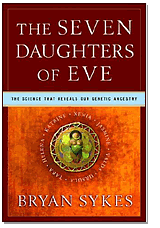
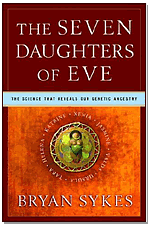
Just a little Molly notice here. I took some time preparing a review of Bryan Sykes book 'The Seven Daughters of Eve' which I have recently read. I began the review of January 3rd, and have only published it today. Thus it appears back in time on the date of January 3rd on this blog thanks to the wonders of blogger.
I'll also eventually get around to recreating the archives links on the main page that got lost in my Christmas time ooops. I recreated the links first. Honest, honest, honest .
Finally, there are a couple of new links I's like to draw your attention to. Both are from a Kiwi. The first is the Anarchofairy blog, and the second is the New Zealand anarchist publishing project from the same person (I think) called Rebel Press under the anarchist Publishers and Distributors section. I've pulled a particularly good essay off the first item and hope to republish it later here under 'The Best of The Blogs' title.
Til Then,
Molly

Wednesday, January 03, 2007


THE SEVEN DAUGHTERS OF EVE:
BY BRYAN SYKES
Since beginning his research career on mitochondrial DNA in the late 1980s Bryan Sykes has found himself propelled to the forefront of a virtual revolution in the way that genetics perceives the origin and spread of modern humans. This book(1), published in 2001, is a two part story. The first part covers how Sykes travelled from his early career as a medical researcher studying "brittle bone disease", also known as "osteogenesis imperfecta", an inherited disease of collagen formation found in cats, cattle, dogs and humans. As part of this the author gives a brief reconstruction of the history and science behind human genotyping in such chapters as 'From Blood Groups to Genes' and 'The Special Messenger'. Interspersed with this is a layman's explanation of DNA and, especially, mitochondrial DNA(2). Mitochondrial DNA is what Sykes research has been focused on. This is DNA that is inherited only (or at least 99.99%) through the maternal line. Sperm only contain mitochondria in their tails which are shed at the time of egg fertilization. As such they contribute only nuclear DNA to the new embryo.
What this means is that sequencing of mitochondrial DNA and its mutations can provide an estimate of the relatedness of individuals via their mothers, and their mothers, and their mothers,etc.. Research separate from that of Sykes and his group in this field has contributed to the idea of "Mitochondrial Eve", the mother of us all who lived in Africa(3) about 150,000 years ago.
After his excursion into the history and basic science of human genotyping Sykes describes the development of his field through an autobiographical account of his research. Not all of this is in chronological order, but the cast of characters that passes by is impressive. His early work was on extracting and amplifying mitochondrial DNA from bones only a few hundred years old at a time when the whole matter of the PCR technique was a matter of "shake and bake" chemistry in flasks rather than automated machines. From this it is on to proving the technique by research on golden hamsters. All of these pet animals are descended from one female first captured in Syria in 1930. Yup, it worked. The mitochondrial DNA of all pet and lab hamsters in the world was exactly identical. The story was true. They were indeed all descended from one mother.
From that humble beginning it's upward and onward. Tracing the presumed bones of the last Tsar and his family discovered in Ekateringburg in 1991 by comparison with living relatives of the Romanovs (at least a partial confirmation of the fate of Russia's last Royals and a disconfirmation of several claims to "Anasthasiahood"); genotyping of the "Iceman" found in the Italian Alps in 1991(and finding his living relatives in many present day Europeans); definitive proof of the South East Asian origins of the Polynesians (as opposed to the theory of their American origin); disproof (though often disputed) of the theory that Neanderthals interbred with early modern humans. All of this and more, all the time interspersed with clear explanations of the technical details involved and the disputes to which mitochondrial DNA testified.
All of this is perhaps a lead-in to what Sykes obviously considers his greatest triumph, his dispute with Luigi Luca Cavalli-Sforza, the acknowledged world expert on human genetics. The matter was the origin of modern European populations and whether they date deep into the paleolithic or whether they are the result of fairly recent "replacement" by agriculturalists "invading" from the Middle East. After a great amount of dispute and sound and fury Cavalli-Sforza came to accept Sykes' theories as derived from a study of mitochondrial DNA. In Sforza's case the clincher came from his own research on the DNA of the Y Chromosome, the "paternal line" as contrasted with Sykes' maternal line. Agriculture came to Europe by diffusion rather than invasion, and the present population of Europe traces back to women who lived in the paleolithic- despite a small contribution from the Middle East.
As a matter of fact Sykes traces the vast majority of present day Europeans back to just seven "founding mothers", the "daughters of Eve" of the book's title. Other researchers in the field have claimed that there are actually 10 to 12 "matrilines" present in Europe, and ongoing research is tracing more than 29 other "matrilines" across the world that descend from the original Mitochondrial Eve. The relationships between these clades(4) is a matter of present day dispute, but the general idea that individuals can trace their genetic ancestry to a small number of "founding mothers" is pretty well an established fact.
The new science of human origins founded on facts such as these is light years removed from the sort of "population origins" theorized about in faculties of anthropology even 25 years ago. Every population is a mosaic of origins in which different individuals trace their origins back to different "founding mothers", and in which the descendants of these mothers can easily live at opposite ends of the Earth. Combine this with the fact, as demonstrated by writers such as Richard Dawkins that various genes in a human individual may have totally different ancestors, and the concept of "race" becomes even more like a relic from a bygone age that only politicians can argue about.
The latter half of Sykes' book is devoted to an imaginative reconstruction of the everyday lives of each of the presumed daughters of Eve. They lived in different times and places, but their lives held more than a few commonalities. Despite the different climes and technologies available the lives of these women had much more in common than they had in difference. Sykes basically follows the consensus view of most modern archaeologists in that the lives or these women were indeed short and hard (in contrast to the Arcadian dream world of some ideologists), but they had more than their share of joys. The worlds that Sykes describes have a much greater feel of reality about them than the projected wishes of said ideologists who seem to envision "primitive people" as bodiless distillations of the ideologue's hopes and dreams, wistful ghosts who drift around busying themselves with "being one with nature" and playing whatever "joyful games" the modern ideologue may approve of (but never those he might disapprove of). On the other hand this paleolithic world may have always had the potential for intergroup conflict, but the consensus is that this was a rare event compared to the fantasies of the ideologues of "man the warrior". This also holds the aura of truth rather than ideological begging the question.
The second half of Sykes' book is admittedly not a work of science, but it is at least a journeyman's work of historical fiction.
MOLLY NOTES:
1)'The Seven Daughters of Eve' by Bryan Sykes, W. W. Norton and company Ltd., New York, London (2001). ISBN 0-393-02018-5
2)See the following references on mitochondria and their DNA
i)Mitochondria
ii)Mitochondrial DNA
iii)The Mitochondrial Genome
3) The actual homeland of Mitochondrial Eve is in dispute. The majority opt for the area of Ethiopia, Kenya and Tanzania. A minority feel that an Asian origin is more likely. What is hardly in dispute, however, is that this woman lived at a time of a "population bottleneck" when the number of proto-moderns was extremely low. Hence the fact that all of us today descend from her in a line traced through our mothers. It should also be noted that this woman was not the "single ancestor" that the term Eve suggests. It is pretty well certain that other women living at that time left descendants, but she is the only one whom we can trace back in an unbroken line of mothers. Many others left their genes to their sons to pass on. their nuclear DNA lived on, but their mitochondrial line was broken.
4)Clades are groups of organisms that are traced through common descent and not just through anatomical similarities.

Thursday, December 21, 2006

THE PUZZLE OF HUMAN SOCIALITY:
The December 8th edition of Science Magazine (Vol. 314, Issue 5805), the journal of the AAAS, has three very interesting articles on the evolution of cooperation. Two are specifically related to human sociability and one is a general theoretical piece on the evolution of cooperation. This blog explores the first article of the eponymous title in the 'Perspectives' section of the magazine (pp1555-1556). Further entries will explore the other articles.
Robert Boyd has written an overview of an article by S. Bowles in this issue of Science. The subject is the "evolutionary puzzle" of the wide range of human cooperation as compared to other animal species. As the author says,
"Division of labour, trade and large-scale conflict are common. The sick, hungry and disabled are cared for, and social life is regulated by commonly held moral systems that are enforced, albeit imperfectly, by third party sanctions. In contrast, in other primate species, cooperation is limited to relatives and small groups of reciprocaters. There is little division of labour or trade, and no large scale conflict. No one cares for the sick or feeds the hungry or disabled. The strong take from the weak without fear of sanctions by third parties".
(Molly note: This introduction overstates the case greatly !!!. Of all the presumably human-only attributes cited above only "trade" is absent in other social species. This is not just confined to the primates. Other social species exhibit ALL the behaviors cited, though with specific items in each species. Third party sanctions, as the author calls them, are actually a fertile field of research in primatology and other fields. There they are called "altruistic punishment" , and anyone familiar with the behavior of domestic animals sees these agonistic actions on a routine basis. Ah, well it's a review, and the author is allowed to overstate his case.)
The author goes on to explain the disproportionate levels of cooperation between humans and other primates by proposing that the small size of primate societies means that kin selection provides a reasonable explanation of the behavior. The reviewer then goes on to point out that Bowles proposes that competition between genetically differentiated groups of proto-humans led to evolutionary selective pressure that favoured prosociality genes. He says,
"Limited migration between groups can lead to the buildup of genetic relatedness...among group members. This means that group membership can also be a clue that allows assortative interaction-genes that cause you to help members of your group can be favoured because other group members are disproportionately likely to carry the same genes, even though you do not share a recent common ancestor."
The author does point out that this idea, originally found in Darwin's 'The Descent of Man' has never been very popular. It's called "group selection". It was a theory held by Kropotkin amongst others (and Kropotkin took it to the extreme of species level selection). The reviewer points out that Bowles meets the standard objections to group selection with both data and theoretical considerations. First of all, data are presented about the level of genetic differentiation between hunter gatherer groups that present a different picture from the standard view. Hunter gatherer groups are much more different genetically than has usually been assumed and, therefore, intragroup cooperation has a basis of genetic similarity greater than what is usually assumed.
(Molly Note: watch out, there's a "weasel word" contained in Boyd's summary. He states that the level of differentiation between groups is the same as "the level of relatedness within such groups". That is not necessarily true. The two are NOT synonyms. It is easily conceivable that another human group can be widely different in a genetic sense while a competitive group can have all sorts of different levels of similarity)
The level of costs and benefits according to these articles is that cooperation will be favoured if the benefits are about 10 times the cost. The ability of cooperative groups to colonize the territories of competitors means that competition amongst relatives does not attenuate the benefit of cooperation. It is finally pointed out that intergroup competition is common in hunter gatherer societies (Molly Note: unlike the fantasies entertained by primitivists) so that benefits from cooperation are substantial.
Finally and perhaps most importantly, according to Boyd, Bowles notes that foraging groups have culturally transmitted norms such as food sharing and imposed monogamy that "reduce fitness differences within groups. he makes the original and interesting argument that such 'levelling mechanisms' act like redistributive taxes to reduce the disadvantage of engaging in costly prosocial behavior".
(Molly Note: These behaviors are themselves genetically influenced in humans and are not pure examples of cultural transmission. They also vary between groups, but, in general, they hover about a norm that is a clue to our evolutionary sociobiology)
The reviewer goes on to argue that the article by Bowles is not a group selection hypothesis because it merely presents an alternative mathematical framework that works out to the same sums as viewing the matter within kin selection lenses. This may or may not be true. Boyd then poses the questions of whether the levels of genetic variability observed in today's foragers are the same as those in Pleistocene hominids, whether the benefits were the same then as now (Molly Note: a questionable assumption given a much ! lower population density) and whether the "leveling mechanisms" were the same in ancestral populations.
The reviewer opines that "there is little dominance among human foragers" in contrast to other social species, an opinion that is not a settled matter. He goes on to suggest that, "It is certainly fair to invoke reproductive levelling to explain the stability of extended altruism among humans, but whether it is sufficient to explain its origin is not yet clear."(Molly Note: I am of the opinion that they are NOT for many reasons, not the least because research on altruistic punishment suggests that this mechanism which appears in other social species has a broader effect than 'reproductive levelling'. This is the old "proximate cause" and "ultimate cause" argument. Altruistic punishment can evolve via mechanisms in a social species that are very much removed from "reproductive levelling" and still be perpetuated in the species because they happen to serve the "ultimate cause" of reproductive levelling. Concentrating on one cause may lead to an ignoring of more fruitful areas of research.)
The author concludes with speculations on what he sees as the "competing explanations" for human sociality ie "the theory of mind, spoken language and other cognitive mechanisms" As he notes all these explanations are not mutually exclusive. Molly feels that the explanation of human cooperation will be a multi-faceted "complex" one rather than a "chaotic" one of one evolutionary pressure reaching some sort of "tipping point". Genes will interact with each other in a full "genetic environment" that is, in turn, influenced by the "memetic environment"-itself complex- of a learning animal. At its best this is what anarchism posits as an explanation for social evolution in contrast to the unidimensional theories of traditional Marxism and present day primitivism.
The other two articles in this issue of Science will be reviewed later.
Til then,
Molly

Tuesday, November 21, 2006

Survival of the Fittest Quotes:
More Well Evolved Flowers From 'The Quote Garden':
In light of the previous item on this blog here are a few items that have won the struggle for existence:
A. "Evolution is individual- devolution is collective."
-Martin H. Fischer
B. "We must, however, acknowledge, as it seems to me, that man with all his noble qualities, still bears in his bodily frame the indelible stamp of his lowly origin."
-Charles Darwin in 'The Descent of Man'
C. "That in man which cannot be domesticated is not his evil but his goodness."
-Antonio Porchia in 'Voces, 1943'
D. "Modern man is the missing link between apes and human beings."
-Author Unknown
E. "A simple and irrefutable argument to knock creationism on its ass: 1)Humans are a mistake-subproof:opposable thumbs and enlarged brain capacity are the combined number one factor in the increasingly speedy destruction of our planet. 2)God doesn't make mistakes. 3)Therefore God couldn't have created people."
-Cassus Garrulitas

And here are a couple from Frans de Waal himself:
a)De Waal's Law: People such as primatologists and zookeepers who work on a daily basis with apes, always have a high opinion of apes' intelligence and abilities. Those who attempt to minimize apes' language abilities and cognitive skills are always people with little or no first-hand experience with apes.
b)The possibility that empathy resides in parts of the brain so ancient that we share them with rats should give pause to anyone comparing politicians with those poor, underestimated creatures.

Love the last one,
Molly

Monday, November 20, 2006

Darwin At The Zoo:
The latest edition of Scientific American (Dec., 2006) has an interesting review of Frans de Waal's latest book 'Primates and Philosophers: How Morality Evolved' by science writer Jonathan Weiner. The title of the review comes from an experience that Darwin had in March, 1838, a year and a half after the voyage of the Beagle had ended. Darwin was an observer of what Darwin could only see as a "temper tantrum" that an orangutan took because of the "unfairness" of her keeper. Darwin speculated about the emotions and their possible connections with morality throughout his life. The culmination of this was his 1872 book 'The Expression of the Emotions in Man and Animals' (see Darwin-Online in the links section of this blog for the complete text). Therein he gives the key to human morality, empathy, in the following quote,
"The movements of expression in the face and body, whatever their origin may have been, are in themselves of much importance in our welfare. They serve as the first means of communication between the mother and her infant; she smiles approval, and thus encourages her child on the right path, or frowns disapproval. We readily perceive sympathy in others by their expression, our sufferings are thus mitigated and our pleasures increased; and mutual good feeling is thus strengthened."


The reviewer states De Waal' position in the following paraphrase'
"In his scientific papers and popular books (including 'Chimpanzee Politics', 'Our Inner Ape' and 'Good Natured') he argues that Darwin was correct from his first view of Jenny at the zoo. Sympathy, empathy, right and wrong are feelings that we share with other animals; even the best part of human nature, the part that cares about ethics and justice, is also part of nature."


The reviewer states that in this book de Waals "tries to refute a popular caricature of Darwinism...people assume that to be good, be nice, behave, play well with others we have to rise above our animal nature."


The truth is the exact opposite. Weiner says,
"In reality, as de Waal reminds us, dogs are social, wolves are social, chimps and macaques are social, and we, ourselves, are "social to the core". Goodness, generosity and genuine kindness come just as naturally to us as meaner feelings."


The reviewer quotes de Waal,
"Instead of empathy being an endpoint it may have been the starting point".
Weiner goes into the case of one of de Waal's most famous experiments in which he demonstrated that capuchin monkeys appreciate fairness and unfairness. The second half of de Waal's book consists of a critique of his theories by several commentators and de Waal's replies to them. The reviewer concludes that "it seems clear that we can no longer look at morality as a sort of civilized veneer on a cold and selfish animal, even though that view goes back long before Darwin went to the zoo. Its origins lie in the Western concept of original sin"

Frans de Waal has had a long and distinguished career in primatology. He was born in 1948 in Utrecht, the Netherlands and received his doctorate in Biology from the University of Utrecht in 1977. His dissertation was on aggressive behavior and alliance formation in macaques. At this time he had been 2 years into a 6 year project studying the world's largest chimpanzee colony at Arnhem Zoo. This resulted in a number of scientific papers and his first book 'Chimpanzee Politics'. In 1981 he moved to the USA, and in 1991 he took up his present position at Emory University and the Yerkes National Primate Research Center. For a brief introduction to de Waal see the Wikipedia article at http://en.wikipedia.org/wiki/Frans_de_Waal . For a more in depth profile see the 'Proceedings of the National Academy of Science (August 1,2005) at http://www.pnas.org/cgi/content/full/102/32/11137 . For a complete bibliography see his profile at the Emory University site at http://www.psychology.emory.edu/nab/dewaal .
De Waal was one of those originally broke a long standing taboo in ethology, that one couldn't ascribe human like emotions to anaimals. Since the time of 'Chimpanzee Politics' the view has changed dramatically due to the work of people like De Waal, Jane Goodall and Donald Griffen. De Waal remarked,
"The time was ripe. If I had written that book ten years earlier, probably I would have been burned at the stake. Ten years later and it would have been after the revolution."
There's another interesting quotation from the PNAS article mentioned above (which also has a link to de Waal's "inaugural article" 'The Monkey in the Mirror:Hardly a Stranger',
"In this book I'm arguing that we have two sides. We're really a bipolar ape. We have a very nasty side to us, and we are nastier than almost any other animal that you can imagine. But we also have a very nice, altruistic side to us. And when we're nice, we're actually much nicer than almost any animal you can imagine."

'Primates and Philosophers'(ISBN 0-691-12447-7) is published by Princeton University Press. Ordering information can be seen online at their website where you can also view a fairly lengthy extract from the book at http://press.princeton.edu . The book contains a rather interesting quote on Kropotkin and other Russian naturalists in Chapter 1 that pup provides on their site. It runs as follows'
"It should be pointed out, though, that in Huxley's time there was already fierce opposition to his ideas (Desmond 1994), some of which came from Russian biologists such as Petr Kropotkin. Given the harsh climate of Siberia, Russian scientists traditionally were far more impressed by the battle of animals against the elements than against each other, resulting in an emphasis on cooperation and solidarity as against Huxley's dog-eat-dog perspective (Todes, 1989).'Mutual Aid' was an attack on Huxley, but written with great deference for Darwin.
Although Kropotkin never formulated his theory with the precision and evolutionary logic available to Trivers (1971)(Molly Note 1) in his seminal paper on reciprocal altruism, both pondered the origins of a cooperative and moral society without invoking false pretense, Freudian denial schemes or cultural indoctrination and both proved the true followers of Darwin. (Molly Note 2)."


If the reader is at all interested in primatology in general I can do no better than to refer them to 'Primate Info Net' at http://pin.primate.wisc.edu . This site contains numerous links to factsheets on individual primate species, on taxonomy, on the sociobiology of primates, to other primate related sites, conservation,etc.,etc, etc.. There is even a continuously updated listing of 'Primates in the News'.

Molly Notes
1) Triver's 1971 paper, 'The Evolution of Reciprocal Altruism' (Quarterly Review of Biology, 46, 35-57) actually examined a "special case" of altruism ie between non-kin. The ground for his work had been thoroughly prepared by others such as J.B.S. Haldane and W.D. Hamilton who worked on kin selection and inclusive fitness. The ground had also been prepared by the development of game theory in mathematics.
2) De Waal refers-a little- to difficulties with the data that Kropotkin accumulated in his researches in Siberia but even more so to Kropotkin's attempts to theorize about same. Those unfamiliar with the field may find it startling that pretty well any legitimate sociobiological line of research takes observations by people such as Kropotkin (and Darwin and Kropotkin's Russian colleagues,etc.) as an historical "starting point" for what the perhaps the central question of sociobiology---how do you explain the obvious occurrence of altruistic behavior?.
The problems with Kropotkin are a)he was writing in a time when the modern science of genetics simply didn't exist. Kropotkin's genetics were Lamarkian to the core, a mistake that he actually shared with Darwin himself. b) Kropotkin was something of an extreme group selectionist. Kropotkin actually usually took the position that the "level of selection" was the species. This is extreme even by the standards of modern group selectionists who represent a distinct minority amongst present day evolutionary biologists. I tend to hold a rather a conservative position on this matter. I don't believe that "group selection" never happens, just that it is an uncommon and slight influence in most evolutionary situations. Conversely I have a hard time accepted a "genocentric" view of the unit of selection. Genes are always in "tight combinations" with tens of thousands of other genes in any individual so it is hard to see how selective pressure can operate at anything but the most demonstrable of genetic advantages. In most situations a "slight advantage" of a given gene will be drowned out by the "noise" of the random genes that it is combined with. and c) the mathamatical techniques of game theory were not developed at the time when Kropotkin wrote. While he was not a basic mathematical illiterate, such as Marx was, the mathematics of his time were simply not up to the demands of describing the social interactions involved.
3)The reader who consults the original review in SA will notice that this blog has wandered off the subject more than a little. Sorry...but some things seem to grow on their own.
Molly

Thursday, September 14, 2006

Another Goddamn Ad:
I've just added 'The Tree of Life' to the Scientific Links on the left. This is the website of the 'Tree of Life Project'. It attempts to post all that is presently known- and unknown about phylogeny and give a continually updated web accessible "state of the art" overview. Very interesting and worth looking at.
Also Larry Gambone-once more see the links on the left under Blogs- has posted a good opinion piece on the recent shootings in Montreal. Also well worth looking at.
We return you to our regular programming...
Molly

Monday, August 14, 2006

I'm now reading 'Breaking the Spell: Religion as a Natural Phenomenon' by Daniel C. Dennett (Viking, 2006, ISBN 0-670-03472-X). The author also wrote 'Darwin's Dangerous Idea' . This book is a philosopher's attempt to study religion in the light of evolutionary biology.
Chapter One, 'Breaking Which Spell ?' introduces the idea of memes by an analogy to the lancet fluke Dicrocelium dendriticum which has an intermediate stage in ants where it "takes over" the ant's brain and "forces" it to crawl to the highest point of blades of grass in order that the ant may be ingested by ruminants such as cattle or sheep which happen to be the next host of this parasite's life cycle. This worm is very much like the memes which the author will be discussing. They are "selfish" in that there is a struggle for existence amongst memes, and the "fittest" survive.
The author next tries to define what he calls "religion", and he notes some of the problems in arriving at a definition. His tentative definition is, "a social system whose participants avow belief in a supernatural agent or agents whose approval is to be sought". This sort of definition obviously excludes Zen and some other forms of Buddhism, but it does include most Buddhists and even most Daoists. The author opens this chapter with a quote from Freud's 'The Future of an Illusion'. More on this in the next post.